
Table of content:
- What is a Fulfillment Center?
- Difference Between Warehouse and Fulfillment Center
- How a Fulfillment Center Works?
- Benefits of Fulfillment Centers
- Services Offered by a Fulfillment Center in India
- Which Businesses Are Best Suited for Fulfillment Centers?
- Pros and Cons of Choosing a Fulfillment Center for Your Business
- How To Choose The Right Fulfillment Center?
- Fulfillment Center Vs Other Storage Solutions
- Common Mistakes To Avoid In Fulfillment Operations
- In a Nutshell
- Frequently Asked Questions — Fulfillment Center


Fulfillment center is a kind of warehouse or distribution center where businesses store their products, manage inventories, process orders, and prepare them for shipping when customers place orders. It handles tasks like storing, picking, packing, and shipping. It ensures that orders are delivered fast and safely. Fulfillment centers are pivotal for efficient logistics operations and consumer satisfaction.
In today’s fast-paced e-commerce space, the time taken to deliver goods or services remains of the utmost importance for ensuring customer satisfaction and company profitability. Knowing this, fulfillment centers have become important links in supply chain management where the business and the consumer meet the seamless experience.
The warehousing and storage market is predicted to grow to USD 628 billion in 2025, with India being one of the leading forces behind this due to the super increase in e-commerce. As online shopping continues to flourish, the demand for efficient storage and timely order processing has become more crucial than ever. They store products and handle order processing, packing, and shipping, ensuring faster delivery times and enhanced customer satisfaction.
What is a Fulfillment Center?

Think fulfillment centers are like distribution warehouses that are dedicated to the storage, packaging, and dispatch products on behalf of various companies.
In simpler words, a fulfillment center stores, manages, and ships products, picks and packs orders, and processes returns for businesses. They are often referred to as the component of 3PL (third-party logistics), which help in the overall process of ecommerce fulfillment.
The operational method of a fulfillment hubs also differs from the regular contract warehouse because it focuses on getting the product out to the customer as soon as possible.
Different Types Of Fulfillment Center
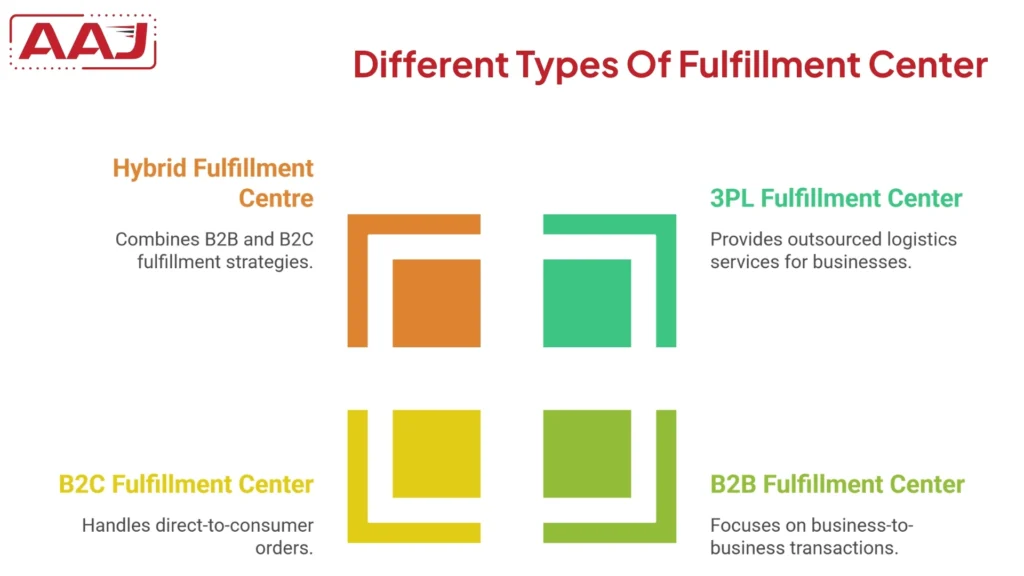
There are various types of fulfillment centers. Here is a list of them below.
1. 3PL Fulfillment Center
A 3PL fulfillment handles various tasks, including product storage, inventory management, and customer shipping, to support any business.
These 3PL fulfillment centers leverage advanced technology like a warehouse management system, barcode scanning, and sensors to track inventories in real time and do order fulfillment faster. Whenever a customer places an order, the 3PL fulfillment staff picks up the product, does the packaging, and hands it to the shipper. They even handle value-added services like return management and customised packing.
2. B2B Fulfillment Center
B2B fulfillment centers handle large volume orders for retailers and sellers. Here, the staff delivers the product to another business instead of the customer.
The process starts with the bulk product arrival from the manufacturer or supplier. The staff thoroughly inspects the products and enters them into the warehouse management system. They then store them in their designated places. The retailers or wholesalers place orders from the B2B e-commerce website. The B2B fulfillment center receives the order details. The staff picks up the bulk product, thoroughly packaging it, and hands it to the shipper. The shipper then delivers the products to the retailer.
3. B2C Fulfillment Center
B2C fulfillment delivers the order directly to the customer instead of any business. They handle a high volume of small individual orders with accuracy. The process begins when a customer orders a product from the e-commerce website. The order details are sent to the B2C fulfillment center via advanced software like a warehouse management system. The staff verifies the order, picks up the product from the shelf, packages it, and hands it to the shipper. The shopper finally delivers the product to the customer. B2C fulfillment even manages order tracking, return processing, and same-day or next-day shipping.
4. Hybrid Fulfillment Centre
The hybrid fulfillment center handles both B2B and B2C orders. This setup enables businesses to manage multiple sales channels, including retail partners, e-commerce websites, and various online marketplaces like Meesho, Amazon, and Facebook.
The business tracks inventories across all channels using advanced software, such as a warehouse management system, to prevent overstocking and understocking issues.
Difference Between Warehouse and Fulfillment Center
While the terms warehouse and fulfillment center are often used exchangeable, they cater to varying operations:
| Warehouse | Fulfillment Center |
| Primarily for long-term storage | Aims at short-term storage and order fulfillment |
| Preferred for storing bulk stock | Stock moves in and out consistently |
| Does not manage shipping | Comprises shipping and returns management |
A warehouse fulfillment center blends the ideal of both - offering storage and quick order processing.

How a Fulfillment Center Works?
Understanding how a fulfillment operates can help you see its value. Below is the process:
- Inventory Receiving: Companies hand over the final products to the fulfillment companies, which are logged into the warehouse inventory system. (this helps in easily identifying various stores or brands with their exact products, availability, and placement in the fulfillment center)
- Storage: Products in a fulfillment hubs are strategically placed to streamline the retrieval process, ensuring that the items can be located quickly and efficiently once a customer places an order.
- Order Processing: After receiving the order, the details appear in the fulfilment center system.
- Picking: The warehouse staff then picks the respective products from the storage.
- Packing: Products are packed according to their specific requirements to ensure they reach their destination safely and in perfect condition. Fulfilment centers use specialized packaging materials based on the product’s size, fragility, and handling needs. Proper packaging not only protects items during transit but also helps minimize returns due to damage.
- Shipping: The order is obtained from the pick and pack warehouse area and dispatched to the customer through the top logistics company.
- Returns Management: When a customer wants to return the product, they also deals with restocking or repackaging that.
Benefits of Fulfillment Centers
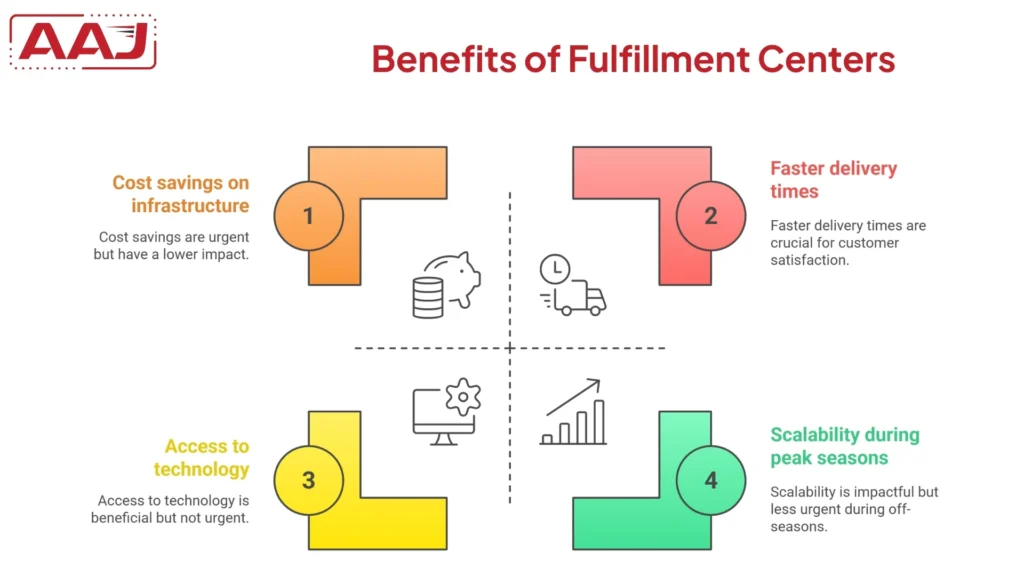
There are various benefits of storing products in a fulfillment center. Here is a list of them below.
1. Faster delivery Times
Today, customers want their ordered products to be received as soon as possible. Most fulfillment centers provide same-day or next-day delivery of the products to the customer, thus meeting their expectations. This also enhances the brand's image in the market.
2. Cost Savings On Infrastructure & Staffing
Building a fulfilment center and storing products in it requires a lot of initial investment. For example, a business must purchase land, build centers, manage staff, and buy heavy equipment. This is not possible for every small and medium-sized enterprise. A business can partner with a 3PL company or B2B fulfillment company and save money.
3. Access To Technology And Automation Tools
Most fulfillment centers can access technology like a warehouse management system, AI, and IOT sensors to track inventories in real time. This avoids the problem of overstocking and out-of-stock issues. It even optimises the layout of the fulfilment centers, which helps in faster order processing.
4 . Scalability During Seasonal Peak
Fulfillment centers provide scalable warehousing solutions, which means they have enough storage space to store business products, especially during peak seasons or holidays.
5. Focus On Core Business Instead Of Logistics
Storing products in a fulfillment center allows businesses to focus on core activities like product development or exploring new markets.
Services Offered by a Fulfillment Center in India

Fulfillment centers in India offer a range of services designed to support e-commerce growth, including:
- Storage: The fulfillment center provides warehouse storage solutions. They have the experience and expertise to store products safely.
- Inventory Management: In addition to order fulfillment solutions, fulfillment centers also offer comprehensive warehouse and inventory management services. These services include real-time stock monitoring, which allows businesses to track inventory levels accurately. By providing real-time updates, fulfillment centers help eliminate the risks of overstocking or running out of products.
- Order Processing and Shipping: It is a critical function of fulfillment centers, designed to ensure fast and efficient handling of customer orders. Many fulfillment centers offer same-day or next-day delivery in metro cities, catering to the growing demand for quick deliveries.
- Customized Packaging: Fulfillment centers provide branded packaging for various brands to improve the unboxing experience.
- Kitting and Assembly: Storing products in sets and packing them instantly to provide convenience of shipment.
Fulfillment centers also integrate with e-commerce websites and B2B platforms such as Meesho, Myntra, Jio Mart, and Amazon to ensure that sellers don’t have to deal with any complications.
Which Businesses Are Best Suited for Fulfillment Centers?
Choosing a fulfillment center can benefit various types of businesses, but it's particularly effective for:
- E-commerce Stores: Small and large e-commerce businesses or those who are ordering merchandise in bulk and selling them on their platforms.
- Subscription Box Companies: It is helpful for those who need shipments in cycles, such as daily, monthly, or quarterly demand, as well as rapid and seamless order processing and inventory management.
- Retailers Expanding Online: All those retailers who want to expand their online sales require a logistics fulfillment center to manage the boosted demand.
- International Sellers: Companies that seek to enter new markets. Fulfillment centers can significantly support them in shipping their goods to different parts of the world.
By getting a hold of a fulfillment center, companies can expand their business without investing in storing inventory, employees, and D2C and B2B transportation.
Pros and Cons of Choosing a Fulfillment Center for Your Business
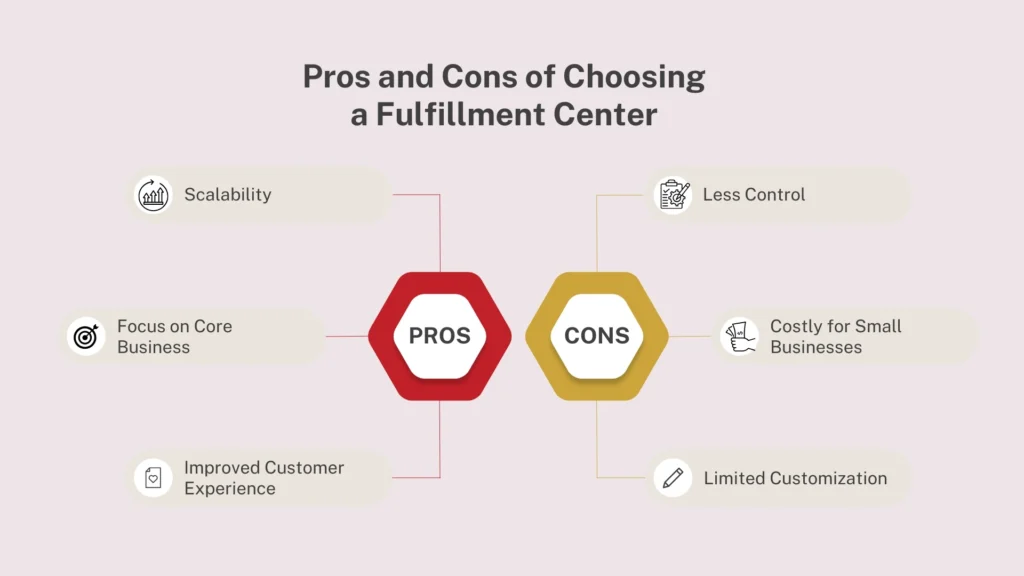
Fulfillment centers have their numerous advantages, but they should only be perceived as suitable for some ventures. Let’s break down the pros and cons:
Pros of Fulfillment Center:
- Scalability: When your business expands, a fulfillment center can process larger volumes of orders effortlessly.
- Cost-effective: Outsourcing of fulfillment leads to a depreciation of warehouse storage, human resources, and shipping companies.
- Focus on Core Business: You can focus on sales, marketing, and expansion of your business while the fulfillment center manages the logistics operations of your business.
- Improved Customer Experience: You experience increased customer satisfaction with fast and error-free order fulfillment.
Cons of Fulfillment Center:
- Less Control: You might lose some oversight of the packing and shipping process.
- Costly for Small Businesses: For smaller companies with fewer orders, fulfillment warehousing costs may not justify the expense.
- Limited Customization: Some centers may offer limited customization options for packaging or branding.
Selecting the appropriate fulfillment center consists of advantages and disadvantages based on your organizational size and demands.
How To Choose The Right Fulfillment Center?
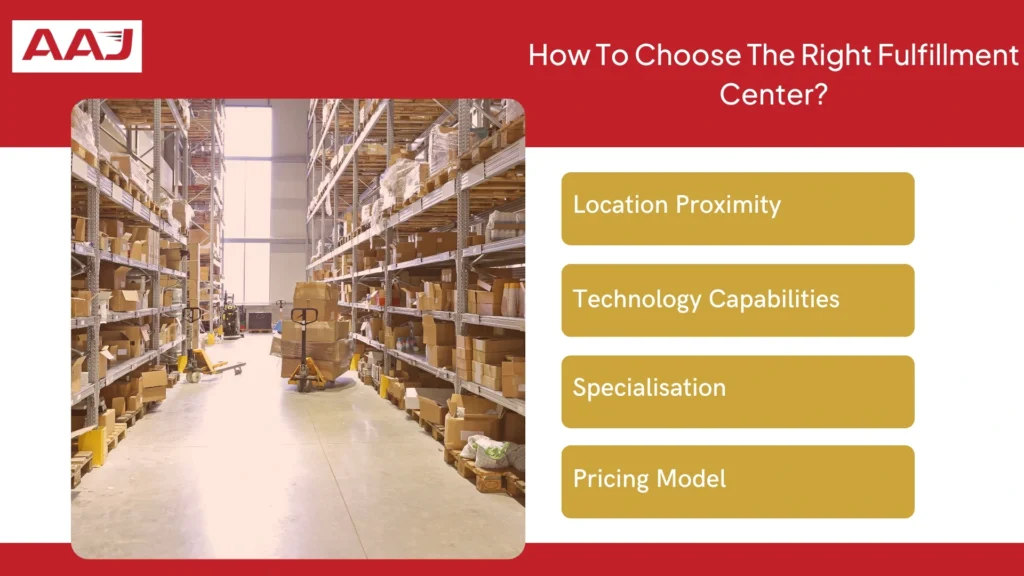
There are various fulfillment centers in the market. A business can choose the right fulfillment company by considering multiple factors.
1. Location Proximity To Customers
Always choose a fulfilment center that is present near the target markets. It will reduce the logistics costs of the Business.
2. Technology Capabilities
The Business should choose a fulfillment center with access to advanced technology, such as a warehouse management system, AI, and machine learning. It will make order fulfillment faster and increase customer satisfaction.
3. Specialisation
The Business should select a fulfillment company that has specialisation in its type. For example, the fulfillment center should have temperature-controlled storage space if a business deals with perishable products.
4. Pricing Model
The Business should compare prices for shipping and storage, as well as other services offered by various fulfillment centers. It should finally select the one that provides excellent services at an affordable cost.
Fulfillment Center Vs Other Storage Solutions
1. Fulfillment Center Vs Warehouse
Fulfilment center: Manages picking, packaging, and shipping operations to the retailer or the customer.
Warehouse: It stores products of the Business safely and in proper conditions.
2. Fulfillment Center Vs Distribution Center
Fulfillment Center: It manages various order fulfillment operations like picking, packaging, and shipping. It can be of multiple types, like third-party, B2B, and B2C fulfilment center.
Distribution Center: It supplies products in bulk quantities to the retailers.
3. Fulfillment Center Vs Crossdocking
Fulfillment Center: It stores inventories either for the short or long term. Whenever a customer orders a product, the staff pick it, do the packaging, and hand it to the shipper.
Cross-docking: Cross-docking is a logistics strategy in which the staff loads the product from the inbound vehicle. Goods are immediately transferred to the outbound vehicle with minimal or no storage in the warehouse.
Common Mistakes To Avoid In Fulfillment Operations
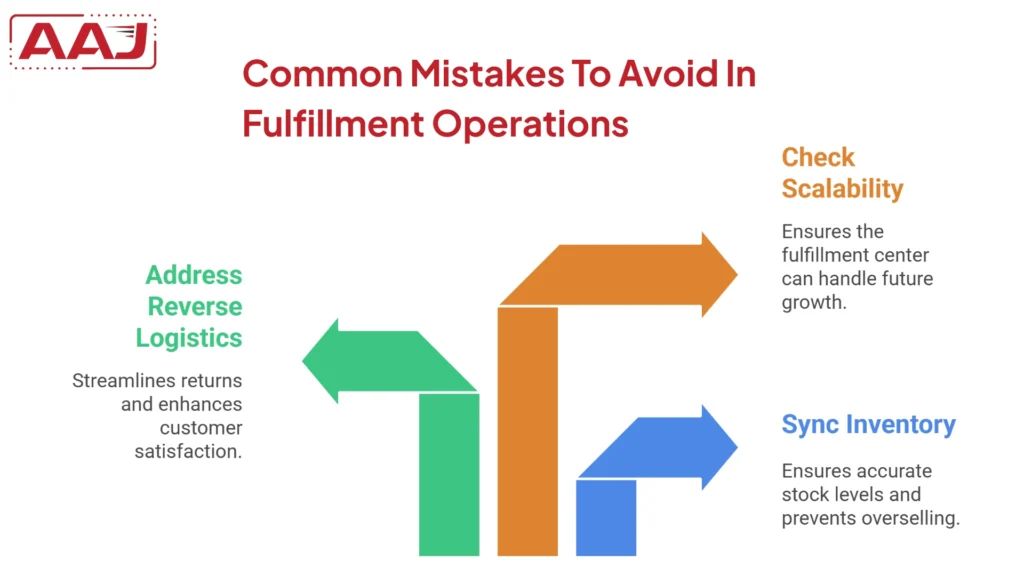
1. Not Syncing Inventory With Sales Channels
When a fulfillment center does not integrate with the e-commerce website, it can lead to overstocking and understocking issues.
2. Ignoring Reverse Logistics
Most of the fulfilment centers focus on the forward logistics process. But reverse logistics is a part of the supply chain process. Many fulfillment hubs ignore the return management process, which dissatisfies customers.
3. Choosing A Center Without Checking Scalability
The fulfillment center should be able to handle seasonal peaks and growth, especially during peak season and holidays.
In a Nutshell
To summarize, a fulfillment center in 2024 and beyond is much more than a warehouse. It is an efficient solution to helping businesses succeed in the competitive environment of an e-commerce era.
Both small businesses that are growing and big companies that may want to expand should consider involving the right warehouse. This will enhance all your warehousing operations and customer satisfaction and boost your overall business growth rate.
As the e-commerce realm continues to evolve, fulfilment centers will be an even more integral part of business success, making it crucial to opt for smartly.