Table of content:
- What Is Storage?
- What Is Distribution?
- Storage VS Distribution - What Is The Difference
- How Do Storage And Distribution Work Together?
- Benefits Of Optimizing Storage & Distribution
- Common Challenges Businesses Face In Storage Distribution
- How To Choose The Right Partner For Storage And Distribution?
- Final Words


In a supply chain, distribution and storage are interrelated operations. Storage involves keeping goods safe in a warehouse until they are needed, while distribution ensures those goods reach the right customer on time.
The global market size of warehousing and distribution was valued at USD 13.5 trillion in 2023. Many researchers anticipate that it will grow at a CAGR of more than 5% between 2024 and 2032. So, storage and distribution are the backbone of a business's supply chain.
Storage refers to holding goods in the warehouse until the customer or retailer orders the product. Improper storage can lead to overstocking or understocking issues. So, most businesses use advanced technology, such as a warehouse management system, to manage their inventory.
Distribution involves moving and handling goods from manufacturers to the end consumer. It involves various activities like order processing, packaging and last-mile delivery.
Today, most e-commerce businesses depend on advanced technologies like GPS tracking and route optimisation software to deliver products faster and cost-efficiently to the customer.
What Is Storage?
Storage refers to the activity of storing goods inside the warehouse until they are necessary for sale or B2C distribution. Its main goal is to supply a steady flow of goods or products to the market and enhance customer satisfaction. Nowadays, most warehouses have 24-hour CCTV surveillance. So when a business stores products in warehouses, they are less prone to theft. Again, warehouses leverage advanced technology for tracking inventories and avoiding problems of overstocking and understocking.
Importance Of Storage
- Proper storage enables picking the order, packaging it and preparing it for shipping and logistics. So a good storage improves the order fulfilment and enhances satisfaction.
- Proper storage enables the availability of goods when the demand is relatively high in the market or there is a disruption in the supply chain.
Different Types Of Storage Solutions
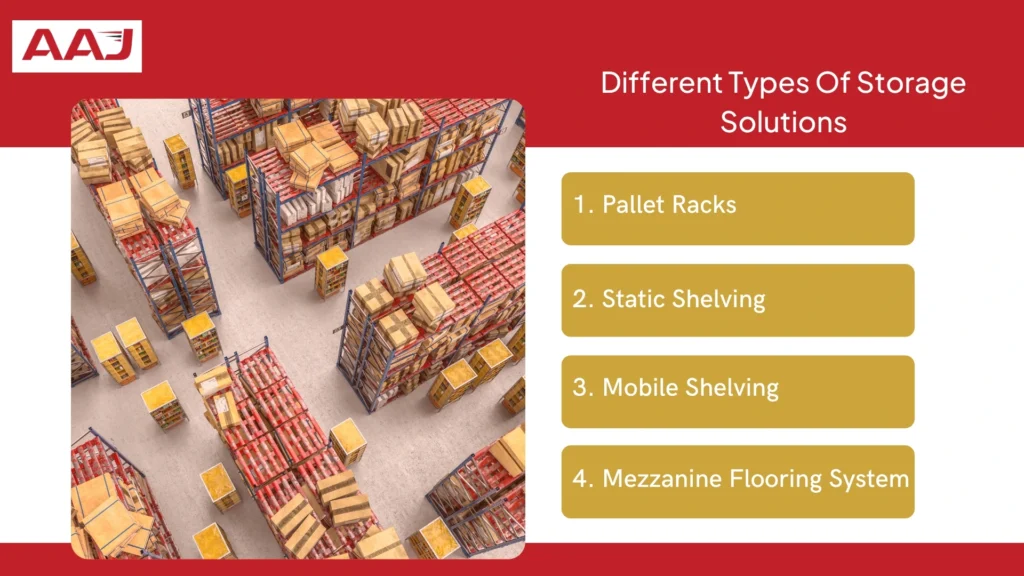
1. Pallet Racks
The warehouse staff store goods or products in pallet racking when they arrive in boxes. Warehouse Pallet racking has beams and connectors that are bolted or connected to hold inventory. The staff stacks goods one over the other in pallet tacking. Hence, it can store many goods in a limited space.
2. Static Shelving
The warehouse staff uses static shelving for light-weight goods. The staff sorts the goods or picks up the ordered product manually. The forklifts do not support these shelves. The staff cannot adjust the static shelving once it is put in a particular position in the storage and distribution center.
3. Mobile Shelving
It consists of various rows of shelves and moves along the ground on rails. The staff can store more products here in a limited space. The inventories are easily accessible here.
4. Mezzanine Flooring System
A mezzanine flooring system means the construction of a second floor or a third floor above the storage and distribution facility for storing products. However, it is expensive and may not be suitable for every small and medium-sized business owner.
What Is Distribution?
Distribution refers to the movement of goods or products from one point of the supply chain to another. It means moving goods from the supplier to the manufacturer or finished goods from the manufacturer to the warehouse or the warehouse to the end customer.
Distribution involves various activities like transportation, warehousing, inventory management and last-mile delivery.
Process Of Distribution
- Goods are stored in warehouses or distribution centers.
- When the distribution center receives the order from the retailer or customer, the staff picks up the product, packs it, and hands it to the shipper.
- The shipper chooses the convenient transportation mode, ie air, land or rail and delivers it to either the retailer or the customer.
- If the customer or retailer does not like the ordered product, they place a return request. The product is picked and brought back to the distribution or warehouse facility.
Different Channels Of Distribution
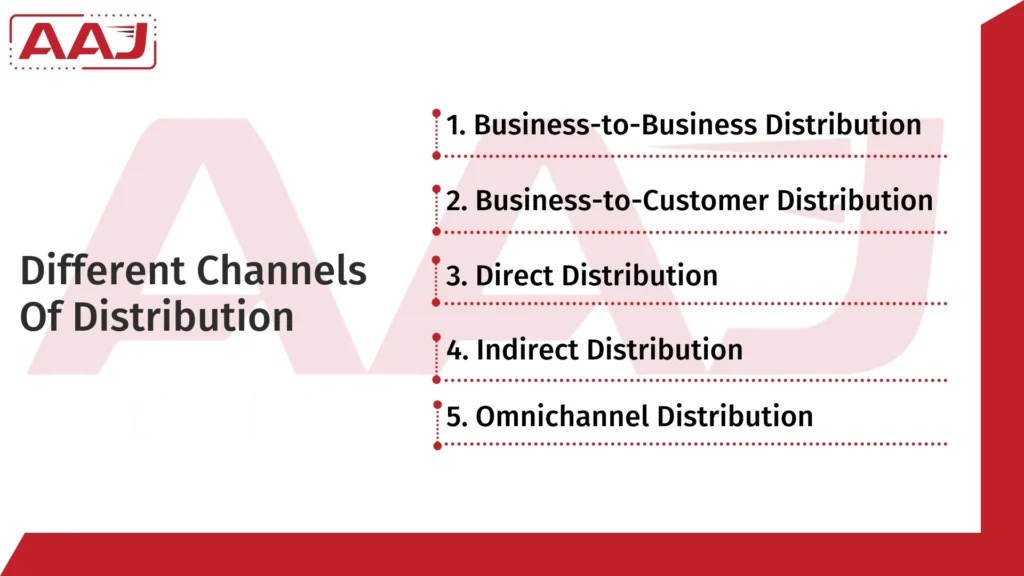
There are various channels of distribution. Here is a list of them.
1. Business-to-Business Distribution
Here, a business sells its products to another company, a retailer, or a wholesaler. The goods are usually bulky and heavy. The business buyer places a bulk order to get discounts. There are typically long-term contracts between a business seller and buyer.
2. Business-to-Customer Distribution
Here, a business sells its products directly to the customer. The customer places the order from the ecommerce platform. The order from the storage distribution center is picked and packaged, and the staff hands it to the shipper. The shipper delivers the ordered product to the customer's doorstep.
3. Direct Distribution
Direct distribution is a channel where the manufacturer sells its product directly to the customer. There is no involvement of intermediaries like wholesalers or retailers. This approach will allow a business owner to have complete control over the branding, pricing and delivery. However, the business has to make a high initial investment in logistics and marketing.
4. Indirect Distribution
Indirect distribution is a channel where the manufacturer does not sell to the customer directly. The intermediaries play an essential role in indirect distribution. For example, the manufacturer will sell products to the wholesalers, and the wholesalers will further sell products to the retailers. The retailer will sell it to the customers. So the product reaches a broader market without much investment in infrastructure.
5. Omnichannel Distribution
Here, the business combines online and offline channels to sell its products. For example, businesses sell products in physical stores, online marketplaces, on Instagram, and Facebook to reach a broader range of customers.
Storage VS Distribution - What Is The Difference
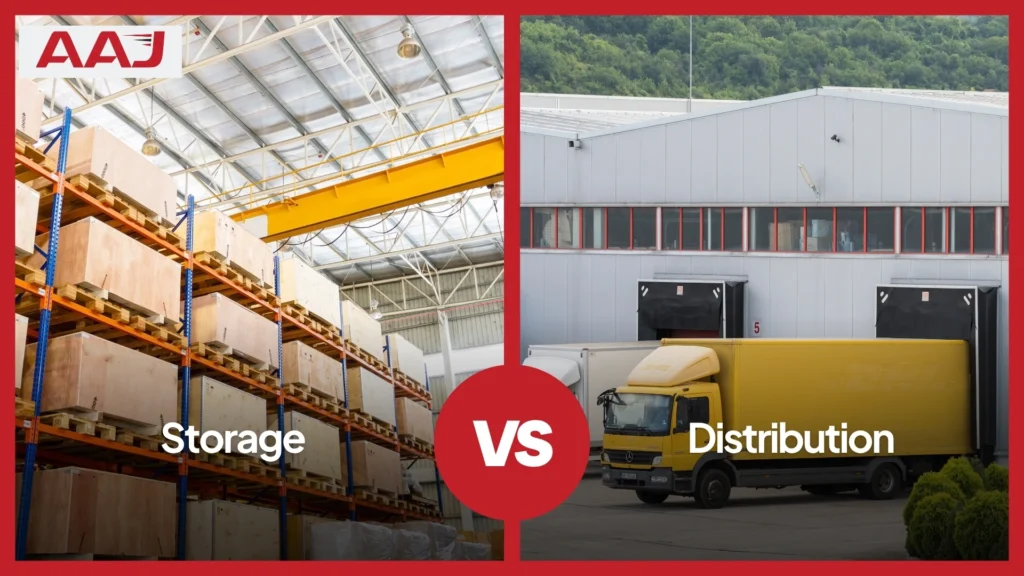
| Feature | Storage | Distribution |
| Purpose | Stores and manages inventories | It delivers goods either to the customer or to the retailer. |
| Time Frame | It stores goods both for the short term and the long term. | It tries to deliver goods as soon as possible to customers or retailers. |
| Processes Involved | Receiving products, sorting them and storing them in the designated shelves inside the warehouses or cold storage units. | Packaging the ordered product, shipping, last last-mile delivery. |
| Goal | The goal is to safely keep all the inventories till customers or retailers order them. | Deliver the products on time to the customer or retailer. |
How Do Storage And Distribution Work Together?
Storage and distribution work together as two key parts of the supply chain. When both are well managed, products are stored safely and delivered on time. This helps businesses reduce delays, avoid stockouts, and keep customers happy. The process starts with:
- The manufacturer produces the finished products, and then transports them to the warehouses.
- The warehouse staff inspects the products properly and then stores them.
- When a customer orders a product, the details are sent automatically to the warehouse. The staff picks up the requested product, does proper packaging and hands it to the shipper.
- The shipper further delivers to the end customer.
Benefits Of Optimizing Storage & Distribution
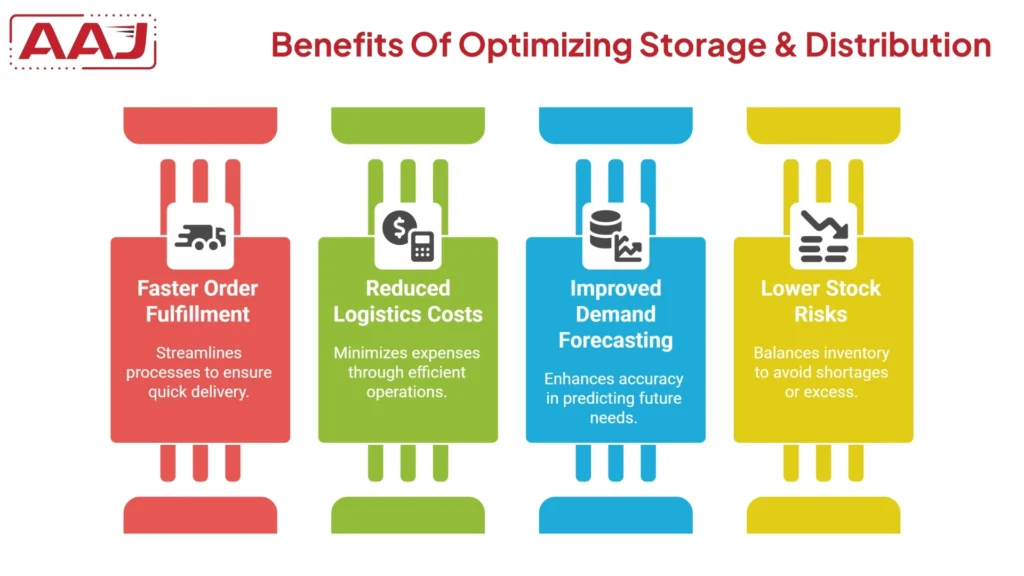
There are various benefits of optimising storage & distribution. Here is a list of them below.
1. Faster Order Fulfillment
When a business optimises its storage and distribution processes, it can pick up, package, and ship products faster to its customers. A quick order fulfillment process enhances customer satisfaction and enhances brand reputation in the market.
2. Reduces Logistics Cost
Today, most businesses use advanced technology, such as warehouse and transport management systems, to optimize their storage and distribution processes. The transport management system chooses the most efficient route and reduces logistics costs.
3. Better Demand Forecasting
Businesses use advanced software to track inventories stored inside the warehouse in real time. It helps in demand forecasting.
4. Lower Risks Of Stockout Or Overstocking
Businesses track inventories from time to time, reducing overstocking and understocking issues.
Common Challenges Businesses Face In Storage Distribution
Businesses face a few challenges in storage distribution. Here is a list of them below.
- High Storage Costs: If the business stores more products than required, it has to bear high storage costs.
- Inventory Accuracies: If there is a mismatch between the actual stock level and the recorded one, it can cause lost sales and dissatisfied customers.
- Lack of Integration Between Warehouse and Delivery System: Whenever the warehouse and transport management systems do not integrate properly, it can delay the delivery of products to the customer.
- Managing Returns and Damaged Goods: Reverse logistics involves picking the items from the customer and inspecting them in the warehouse for restocking or recycling. Managing such processes can be challenging for businesses, and if a 3PL company does not operate properly, it can dissatisfy customers.
How To Choose The Right Partner For Storage And Distribution?

Selecting the proper storage and distribution partner is essential for supply chain efficiency. The appropriate distribution and warehouse partner will store your products properly and deliver them to your customers on time. However, there are various partners available in the market. You need to keep a few things in mind while choosing them. Here is a list of the factors.
- Choose a partner with warehouses near your target markets, which will help deliver products faster to customers.
- The partner should use advanced technology like warehouse and transport management systems to improve inventory visibility, tracking and forecasting.
- The partner should be scalable, which means it can accommodate goods as your business grows.
- The partner warehouses should have 24-hour CCTV surveillance systems to safeguard the products, which should comply with industry regulations, especially when dealing with pharmaceutical or food products.
Final Words
Storage and distribution play an essential role in the supply chain process. The storage involves safe storage of products in the warehouse, while distribution ensures delivery of these products safely and within time. Both methods must be optimized to enhance brand reputation and increase customer satisfaction.