Table of content:


Warehouse storage means keeping goods or products in a warehouse until they are needed. It helps businesses to store items safely, organize, and manage inventory before dispatch products to customers or other locations.
Warehouse storage service is vital in storing and moving products from the manufacturer to the end customer. The Indian warehousing market was valued at USD 14.26 billion in 2024 and will reach USD 34.60 billion by 2030. It highlights the increasing demand for efficient warehousing storage solutions.
Nowadays, most warehouse and storage facilities are accessible to advanced technology and automation for delivering ordered products faster to the customer. This improves brand reputation in the market.
What is Warehouse Storage?
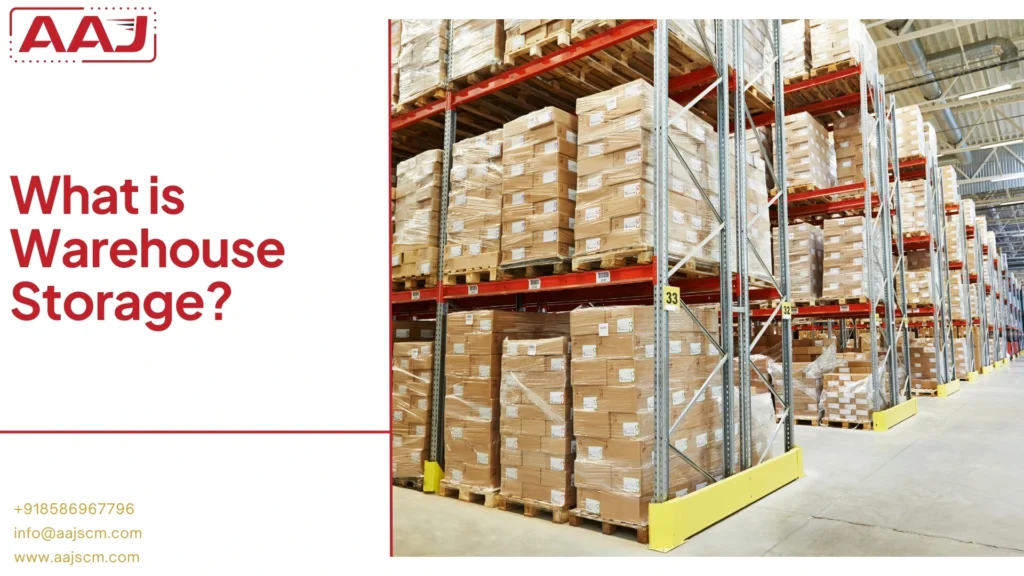
Warehouse storage is an integral part of the supply chain management process. It is a commercial land space designated to store goods or products in bulk safely and efficiently till customer orders them.
Today, most warehouses leverage advanced technology, such as warehouse and inventory management systems. The WMS optimizes the entire warehouse layout and tracks inventories in real time. This avoids problems of overstocking or understocking products in the warehouse.
Warehousing Process:
In the Inward process, the warehouse staff inspects the products that arrive from the manufacturers and stores them in the designated places inside the warehouse. Whenever a customer orders any product, the order details are sent automatically to the warehouse's order management system (OMS). The staff picks up the product and packages it properly, following brand guidelines. Also, packaging staff make sure the product will not be damaged during transit. It then hands over to the shipping companies. The shipping company will choose the most efficient transportation mode by using route optimization software and finally delivering the product to the customer.
Difference Between Warehouse And Storage
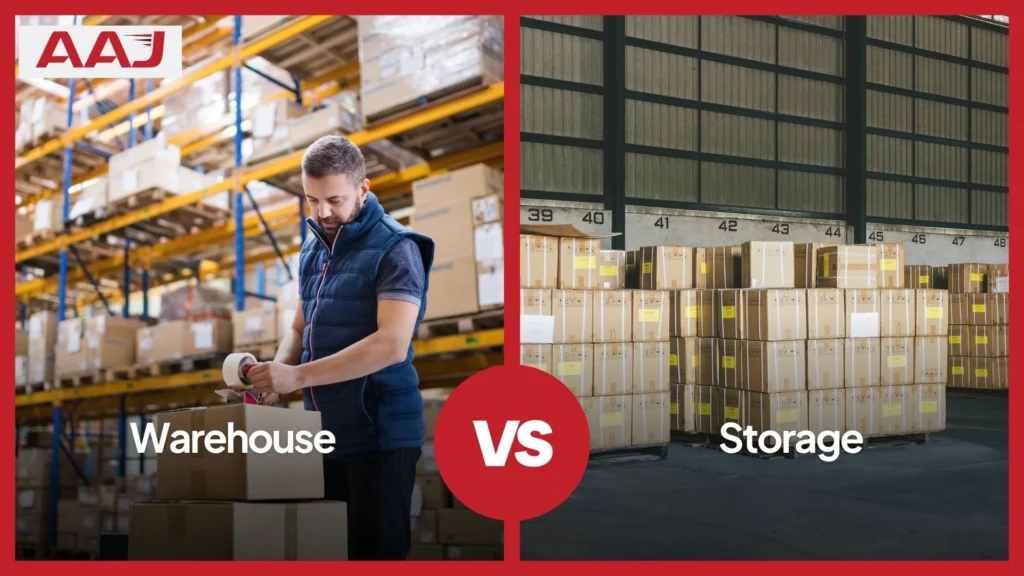
- Storage is simply a safe place for storing products. It can be in a closet or your warehouse. From a business point of view, storage means a business chooses a safe and secure place to store goods or products for a specific period. A warehouse is a tech-enabled facility where the staff store products efficiently and do inventory management, order fulfillment, and returns management.
- Storage has less space compared to the warehouse.
- Storage does not leverage any modern technology. However, warehouses use advanced software to manage inventories.
- A start-up business owner usually stores products in a storage space. However, medium- and large-scale enterprises use warehouses and fulfillment centers to store products.
- Business owners use storage space to store products only for a short time. However, warehouses usually accommodate goods for an extended period.
- Storage facilities usually do not have any secure systems for protecting goods. But the warehouse has 24-hour CCTV surveillance. It protects the goods against theft.
- Businesses do not have to spend much money storing goods in storage facilities. But the construction of a warehouse requires a lot of money.
- Storage facilities do not provide facilities for picking, packaging and shipping. But warehouses offer facilities like order picking, packing and shipping. It even provides value-added services to the business owners.
Best Strategy For Efficient Warehouse Storage
- A well-planned warehouse layout can reduce the time to pick up and package the ordered product. Businesses can utilize the vertical space of the warehouse for storing products. It even maximizes the space inside the warehouse storage.
- Businesses classify the products based on the ABC analysis. The staff can classify fast movers as Class A items and place them near picking and packing zones. The staff can then classify medium movers as Class B items and store them in mid-range locations to be easily accessible. The staff can then classify slow movers as class C items and place them in top-tier racks.
- Businesses should utilize a warehouse management system to optimize the warehouse facility layout.
- Businesses should utilize the just-in-time inventory model, which means they should order the stock when required to free up space inside the warehouse. It even reduces the holding costs of the business.
- The warehouse and storage staff should store products on proper shelves. For example, if the staff handles bulk goods, the goods should be stored in pallet racks.
Different Types Of Warehouse Storage Solutions
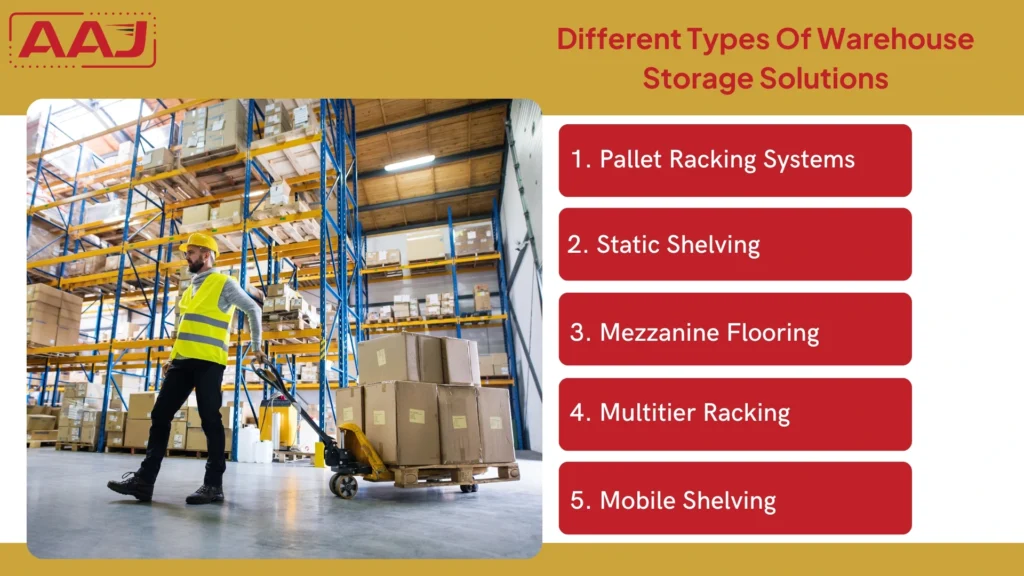
There are various types of warehouse storage solutions. Here is a list of them below.
1. Pallet Racking Systems
The staff uses a pallet racking system to store goods, usually in boxes. These systems can handle heavy objects. The pallets can be made from metal, plastic or wood. The pallets can be designed to run the entire vertical space of the warehouse and store a large amount of inventory.
2. Static Shelving
Static shelving is immovable shelves. It means they cannot move it once the staff installs it. These shelves can store lightweight goods. The staff sorts the products manually and stores them only for a short period. Static shelving does not support forklifts. They can only hold inventories that can be easily carried by hand. The inventories include clothes, books, FMCG products, etc.
3. Mezzanine Flooring
Mezzanine flooring is the second, third or fourth flooring constructed above the original warehousing storage. If a business has good financial support and a warehouse layout, it can maximize the space using mezzanine flooring.
4. Multitier Racking
It involves the construction of shelves or racks on more than one level. This type of storage system is mainly suitable for storing products of small sizes but large numbers. The products are usually lightweight and can be packed manually. A multitier racking system utilizes the vertical space of the warehouse efficiently. The staff can access each level by the staircase or the aisles.
5. Mobile Shelving
Mobile shelves are similar to static shelving. But here it can store a large number of manually picked items. Again, the shelves are movable and adjustable as per the requirements.
Benefits of Outsourcing Warehousing and Storage Service
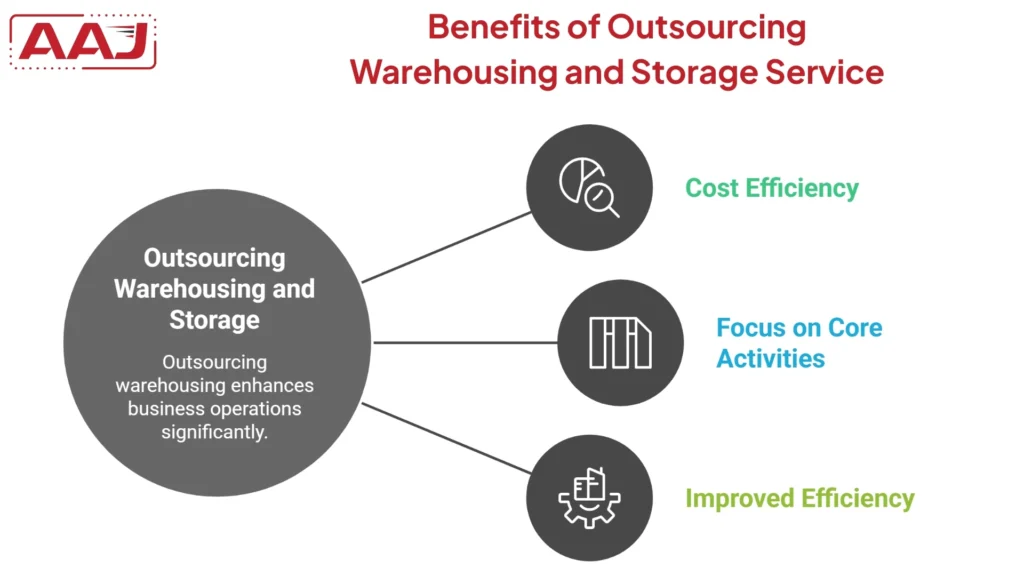
Outsourcing warehousing and storage services brings numerous benefits. Here is a list of them below.
1. Cost Efficiency
Construction of a warehouse and storage facility requires a high initial investment. A business must purchase or lease land, construct, manage staff and buy heavy equipment like forklifts. This is not possible for every small and medium-sized enterprise. Hence, an outsourcing warehouse company is the best option for these businesses. The business does not have to invest in a warehouse structure, equipment or maintenance.
2. Focus On Core Activities
Outsourcing warehousing operations allows a business to focus on core activities like product development, exploration of new markets and many more.
3. Improves Efficiency
Most 3PL companies in India have access to a warehouse management system and automation to increase the speed of the order fulfillment process. It delivers products to the customer faster and enhances the business's brand reputation in the market.
Key Considerations Before Selecting a Storage Solution
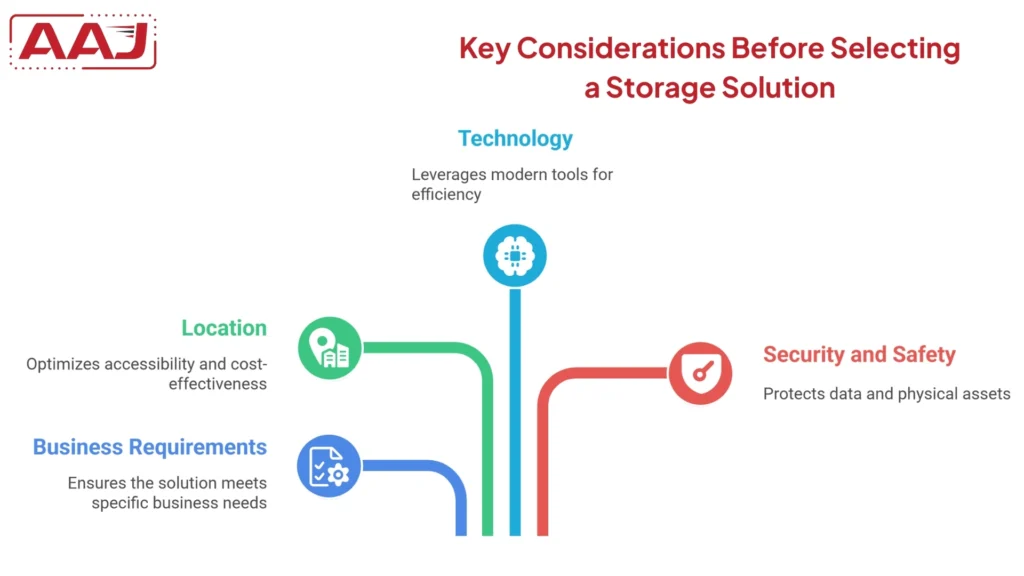
A business needs to evaluate a few factors before selecting a warehouse storage solution. Here is a list of them below.
1. Consider The Requirements Of Your Business
Before selecting the storage and warehouse provider, you need to consider the type of products, their size, perishability and fragility. For example, if you are in the business of perishable products, you require cold storage to maintain the freshness and quality.
2. Location
You should choose a warehouse provider closer to your target markets. It reduces transportation costs and delivers products faster to the customers.
3 . Technology
Choose the warehouse and storage provider with access to advanced technology like a warehouse management system. It tracks products in real time and reduces the business's holding costs. Again, if the warehouse provider can access automation, it can fulfill orders faster and enhance customer satisfaction.
4. Security And Safety
Look for a warehouse provider that has access to 24-hour CCTV surveillance. It ensures products are protected against theft. Simultaneously, the business should look for fire prevention systems and emergency exits while choosing the warehouse partner.
Final Words
Warehouse storage plays a vital role in the business's supply chain. However, small and medium enterprises usually do not have their own warehouses because they require a significant investment of money. Hence, businesses outsource the warehouse storage solutions to a third-party logistics provider; various 3PL logistics providers in the market promise to provide efficient and affordable storage solutions. But you must consider a few factors, like technology access, scalability and location, while choosing a provider.