
Table of content:


Research shows that 30% of delivery disputes occur when there is no POD or proof of delivery. It can lead to customer complaints and further decrease brand reputation in the market.
Delivery fraud and misplaced parcels are becoming increasingly common today. POD serves as evidence that the customer has received the package they ordered. It can serve as legal evidence when there is a delivery dispute between the business and the customer.
What Is POD (Proof of Delivery)?
POD full form is proof of delivery. It is physical or digital evidence that confirms that the intended recipient has received the shipment. POD can be a photograph of the package on the customer's doorstep or the customer's signature upon receiving the ordered product. The delivery boy can show POD as proof that the item has been successfully delivered to the customer. It even acts as legal evidence in case of disputes between ecommerce seller and buyer about the non-delivery of goods.
The POD includes some vital information, which is listed below.
- Recipient Information: It includes details like customer name, address, and phone number.
- Order Details: It includes delivery product details like its name, cost, weight and size.
- Billing Information: It includes payment details like invoice number, total amount paid by the customer, and billing address.
- Shipping and Delivery Details: It includes the name of the company that has delivered the product to the customer or the delivery driver who dropped the packaged product on the customer's doorstep.
- Barcode and Signature: The POD includes barcodes, which enable the Company to track the products during B2B transportation to its final destination.
Different Types Of Proof Of Delivery In Logistics

1. Paper POD
Many transport companies in India use paper proof of delivery. It is a paper in which the customer signs after receiving the ordered product. The delivery boy submits the POD to the sender or supplier to confirm that the product has reached its final destination.
It is simple and easy to use. But paper POD is less reliable than the electronic method because it can get lost or damaged.
2. Electronic POD
The electronic proof of delivery involves capturing the signature of the customer or taking photographs of the ordered packet. The Company further uploaded the signature or pictures in the logistics management software. Electronic POD shares data instantaneously and reduces human errors. But it requires digital devices and internet connectivity to share proof of delivery.
3. Image-Based POD
Here, the delivery person takes a photograph of the delivered package at the doorstep of the customer. It then uploads the image to the system as proof of delivery. The image-based POD acts as strong visual evidence and is useful, especially during contactless delivery. But
4. OTP Based POD
Here, the customer receives a unique OTP by SMS or email and shares it with the delivery person while receiving the ordered product. The delivery person enters the OTP on the system and confirms that the customer has received the ordered product.
5. QR Code/Barcode POD
The company assigns a unique barcode or QR code for each shipment or ordered package. The QR code is printed on the domestic shipping label. The delivery person scans the QR code using a mobile device or scanner while delivering the product to the customer.
Why Proof Of Delivery Matters In The Modern Supply Chain?
1. Builds Customer Trust And Transparency
Companies can use a proof-of-delivery system to assure customers that their ordered products will arrive at the right place and on time. So POD gives clarity to the customers about the delivery of products and builds trust in them.
2. Enhances Operational Efficiency
Today, most brands are using electronic-based POD systems. It reduces manual errors and helps identify delayed or failed deliveries.
3. Supports Compliance And Accountability
POD serves as legal evidence if there is a dispute between the company and the customer regarding order delivery.
How POD Works: Step-By-Step Process
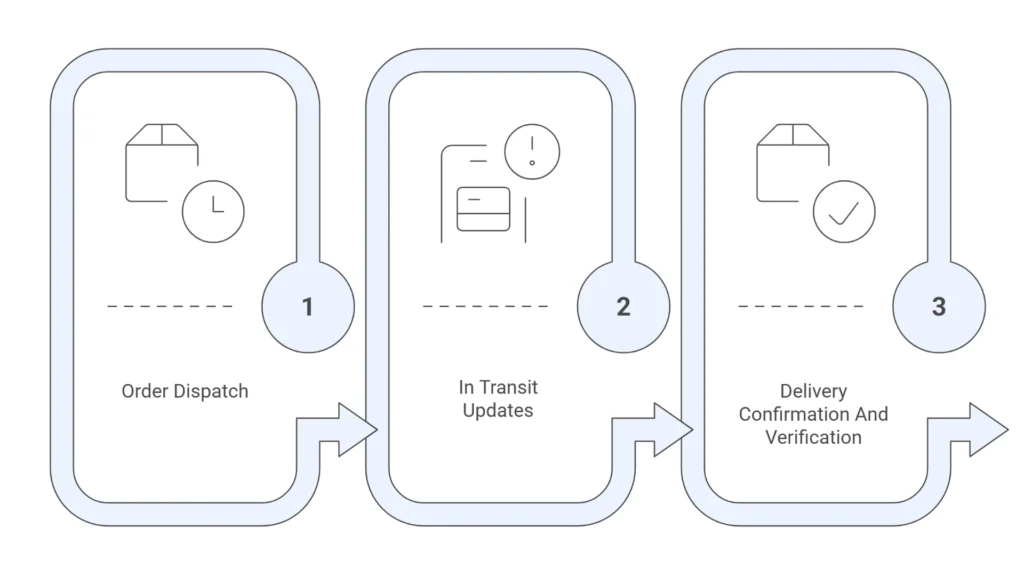
Here is a step-by-step procedure for the working of POD.
1. Order Dispatch
The process of POD begins during the dispatch of the ordered products. Each shipping product has a unique tracking ID that serves as a digital identity throughout the delivery process. The customer's address, mobile number, and name are entered in the logistics system. A QR code is even attached to the shipping label, which can provide instant access to shipment details and delivery progress.
2. In Transit Updates
Today, logistics companies in India use either GPS technology or a barcode system to track products as they leave the warehouse facility. In-transit updates are automatically shared with the Company and the customer, including when in transit, out of delivery, or delayed.
3. Delivery Confirmation And Verification
The delivery boy delivers the ordered package to the customer. He asks the customer to sign digitally on a device or on a physical document. This acts as proof of delivery and acts as evidence that the customer has received the ordered package. The delivery boy submits the POD to the Company's logistics system. The logistics team verifies the POD details to ensure accuracy.
Advantages Of Using Electronic POD Systems
The use of electronic POD systems offers various advantages. Here is a list of them.
1. Real-Time Delivery Updates
The delivery person who uses electronic POD systems updates the delivery status in the system immediately. The logistics team and the customer can view live updates from dispatch to delivery.
2. Digital Recordkeeping
There is no need for physical documents while using electronic POD. So there's no risk of paper loss when saving important information about the product's delivery, such as the customer's name and signature.
3. Seamless Integration With ERP, WMS, And CRM
The electronic POD seamlessly integrates with the business's existing systems, such as enterprise resource planning and warehouse management systems.
4. Reduces Fraud And Fake Deliveries
Electronic PODs require a customer's digital signature as evidence that he has received the ordered products from the ecommerce company. This reduces the chances of fraud and fake deliveries in a company.
Challenges And Mistakes To Avoid In POD Implementation
Implementing POD has certain limitations. Some of them are listed below.
1. Relying Only On Paper-Based Proofs
If a Company implemented only paper-based POD, then there are chances of losing important information related to the customer.
2. Poor Integration Between the Delivery App And The ERP
Many Companies use electronic POD but fail to integrate with enterprise resource planning or warehouse management systems. It creates data silos or incorrect delivery information.
3. Not Training Delivery Personnel Properly
Sometimes the company does not train the staff to use electronic PODs. They enter the data incorrectly, which leads to delivery disputes.
4. Lack Of BackUp Or Cloud Storage For Records
Valuable delivery records can be lost when a device is damaged or the network fails. The company should use cloud storage for storing delivery records.
Final Words
Proof of delivery has become a necessity in a reliable logistics operation. It ensures that goods have reached the intended customer's safety. It provides customer trust and increases business reputation in the market.