
Table of content:
- What Is A UPC Code?
- Structure Of A UPC Code
- Why UPC Codes Matter In Modern Retail?
- How UPC Codes Work in Retail and Supply Chain Workflows?
- Different Types Of UPC Codes
- Benefits Of UPC Codes Across Retail And Supply Chain Operations
- Tools And Technologies Necessary For UPC Code Implementation
- Challenges And Mistakes To Avoid With UPC Codes
- Who Should Use UPC Codes?
- Conclusion
- Frequently Asked Questions — UPC Code


Today, 90% of global retail products depend on UPC or barcode for identification. It reduces manual errors by 95% and optimises stock levels in the warehouse. UPC even helps retailers to manage a large number of customers with ease.
Today, more businesses are utilising an omnichannel strategy. They manage thousands of products on the website, online marketplaces, and physical stores. Managing every product detail and maintaining its stock can be challenging for a business. Tracking every product manually can lead to errors and create problems with overstocking and understocking issues. UPC code simplifies this process and improves accuracy on every sales channel.
What Is A UPC Code?
UPC (Universal Product Code) is a unique 12-digit numeric code that identifies products quickly and accurately. The UPC barcode consists of a series of black bars with white spaces and has numbers printed below it. Each product in the warehouse has a UPC. The staff of the warehouse scans the UPC, and it provides information instantly about the product type, its brand, category, and many more essential details. So a 12-digit unique code of UPC helps the warehouse staff to identify products quickly and accurately.
The concept of the UPC began in 1973. Today, many warehouses, ecommerce fulfillment centers, groceries, and retail shops use the product with a UPC code.
Structure Of A UPC Code
The UPC consists of a 12-digit number, and each section plays a vital role in product identification.
1. Manufacturing Code
The first 6 digits of the UPC represent the manufacturing code or GS1 Company prefix. The number represents the manufacturer of the product.
2. Product Code
The next 5 digits represent the product code. The manufacturer assigns this code to the product and ensures that the code does not get repeated.
Let’s discuss with an example. A manufacturer produces two products that have the same size and shape but have different flavors. The manufacturer will assign two different codes for each product. A unique product code can help a warehouse company or retailer identify the product correctly.
3. Check Digit
The last digit of the UPC represents the check digit and ensures that the worker in the warehouse or the cashier types the barcode or scans it correctly. The system calculates the check digit through a mathematical formula and prevents errors in billing or inventory systems.
Let’s discuss with an example.
UPC: 000063123452
- The first 6 digits, i.e, 000063, represent the manufacturing code.
- The next five digits, i.e, 12345, represent the product code.
- The last digit, i.e, 2, represents the check digit.
Why UPC Codes Matter In Modern Retail?
Today UPC codes matter in modern retail because of the following reasons.
1. Accurate POS Billing
When a salesperson manually fills in the product price at the time of selling, it may take time and have errors. UPC ensures that the products scanned at the time of billing are 100% correct. The barcode links directly to the store price of the product. Accurate POS billing improves customer trust and helps a business to have proper financial reporting.
2. Faster Checkout Speeds
A UPC allows cashiers to scan and process the products instantly. It reduces the waiting time of customers and allows retailers to manage more customers during peak hours. So the UPC code enables faster checkouts and enhances the customer experience.
3. Precise Inventory Tracking
UPCs become a digital footprint for every product that enters the warehouse facility, to the point of sale. The warehouse staff scans the product with the UPC once it receives it from the seller. The staff scans the product once again during storage, order picking, and dispatching. So repeated scanning of products with UPC gives a clear picture of how many products have already sold out from the warehouse. That avoids problems of overstocking and understocking in the warehouse.
4. Essential For Global Retail Distribution
The UPC even serves global product movement. Let’s discuss with an example. China manufactures a product and moves it to a European warehouse. The warehouse service provider can scan the product and know about its origin, brand, and every other detail. The warehouse company then sells it to the Middle East company. The Company can scan the UPC product and know its every detail. So the UPC makes international logistics more reliable.
5. Required For Marketplaces like Amazon And Walmart
Reputed online B2B marketplaces ask for the UPC from the seller to ensure product authenticity. This process prevents duplicate listings, keeps product data constant, and ensures that customers can see accurate information at the time of search.
How UPC Codes Work in Retail and Supply Chain Workflows?
1. Manufacturer Assigns UPC Code
The process of UPC code starts from the manufacturer. The manufacturer registers the product with GS1, which provides a UPC prefix to the product. GS 1 is a global organisation that offers unique barcode numbers to each product.
2. Printing & Labelling
The Company gets the unique UPC from the manufacturer and prints it on each product. The Company should place the barcode in such a place that it can be easily readable and scanned at every stage of the supply chain process.
3. Scanning At Warehouses And Retail Stores
The sellers transport the products with UPC to the warehouse and fulfillment center. The staff of the warehouse scans each product and enters it into the systems. The workers do repeated scanning, especially when the product moves to storage locations or while picking. Repeated scanning maintains accurate stock visibility inside the warehouse and avoids problems of overstocking and understocking.
4. Checkout & Billing
The cashier scans the UPC code of the product at the time of sale. The system instantly retrieves the product price, description, and tax details of the product.
5. Inventory Replenishment Signals
The system uses UPC data and triggers when there is a need to reorder products. Thus, UPC code avoids the problem of overstocking and understocking issues.
Different Types Of UPC Codes
There are various types of UPCs. They are in the list below.
- UPC-A: UPC-A is the most popular code and is common in groceries, clothing, and household items. It consists of 12-digit codes and is highly reliable.
- UPC-E: This barcode consists of only 8 digits, and generally, there is not enough space to write the UPC-A code. It is usually found in small retail items like cigarettes and cosmetics.
- UPC -B: It is a 12-digit barcode used for National Health-related items.
- UPC-C: It consists of 12 12-digit codes that consist of the product code and the check digit.
- UPC-D: It can be 12 digits or more in length. The last digit of the code is the check digit.
UPC VS EAN Codes
UPCs are mainly used in the United States, while EAN (European Article Number) is used in European countries and is acceptable worldwide, including the United States. Today, modern scanners can read both UPC and EAN codes properly and make International logistics seamless and trustworthy.
Benefits Of UPC Codes Across Retail And Supply Chain Operations
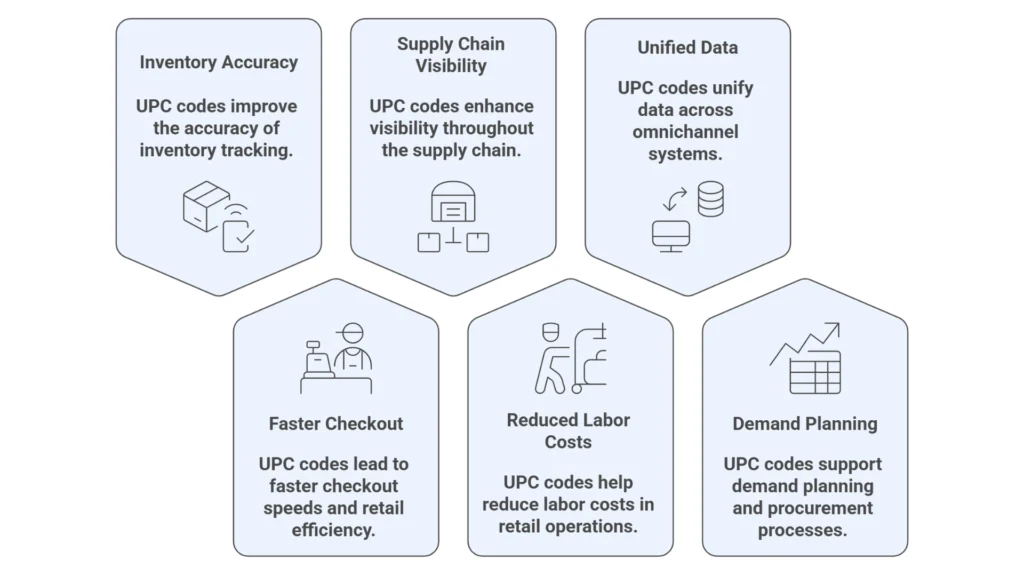
The benefits of UPCs across retail and supply chain operations are as follows.
1. Improves Inventory Accuracy
UPCs maintain stock levels precisely, especially when the staff scans the product. It reduces errors and avoids overstocking and understocking issues.
2. Faster Checkout And Retail Efficiency
Scanning a product with a UPC instantly provides all the details like manufacturing date, colour, size, weight, price, and many more. It speeds up the billing process and enhances customer experience. So the UPC code allows retailers to handle a lot of customers without any hassle.
3. Enhances Supply Chain Visibility
The staff scans a product with a UPC from entering the warehouse to its storage, picking, and billing. Each scan creates a data point and allows the business to trace and record every stage of the supply chain operations.
4. Reduces Labor Costs
UPCs automate product identification and data entry. This reduces errors and labor costs for the business.
5. Unified Data Across Omnichannel Systems
UPC creates a single product identity on various B2B platforms like online stores, physical outlets, and online marketplaces.
6. Supports Demand Planning And Procurement
UPC code-based data shows which products are selling fast and which products are sitting in the warehouse for a longer time. This enables a business owner to forecast product demand correctly and plan procurement based on sales trends.
Tools And Technologies Necessary For UPC Code Implementation
Barcode scanners
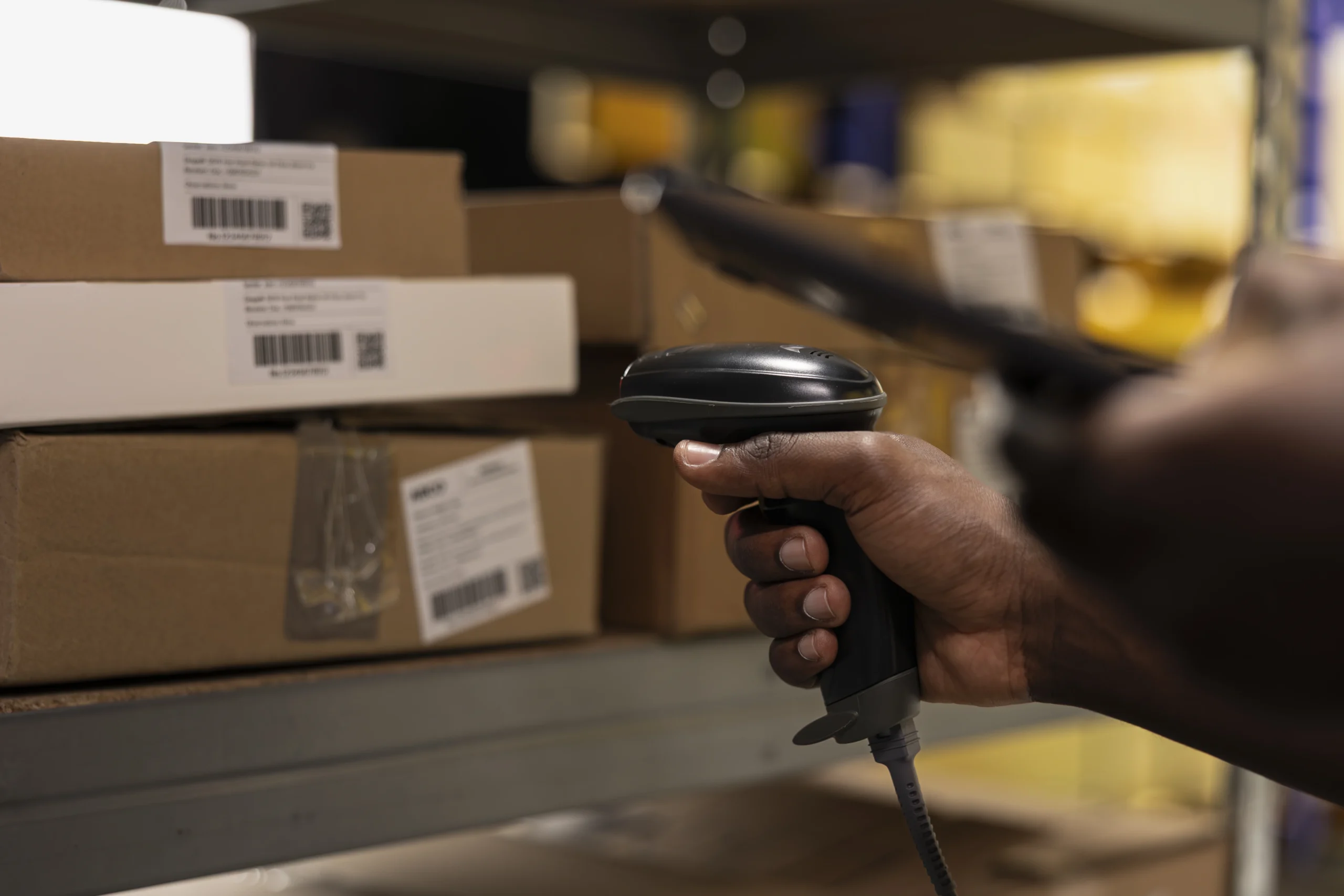
These handheld scanners immediately scan the UPC product and instantly provide information about the product’s weight, size, and shape. Barcode scanners reduce manual errors and are used in order fulfillment companies, warehouses, and checkout counters.
Labelling Systems and Barcode Printers
Barcode printers print the UPC on the product package. High-quality printers ensure that barcodes are printed in the proper place so that the warehouse staff can easily scan them.
Inventory Management Software
The software uses UPC data and tracks stocks in real time, and triggers when there is a need for replenishment in the warehouse.
Challenges And Mistakes To Avoid With UPC Codes
- If a Company uses the wrong UPC prefix, then it creates confusion in the warehouse while tracking stock levels.
- If the product has a UPC but it has a blurred barcode or is printed on a reflective surface, then it will not scan properly.
- If the Company uses the same UPC or barcode for different products, then it causes errors.
- If a business assigns a new UPC to a product but does not update it on software like a warehouse management system, then it leads to missing data or failed transactions.
- Some sellers use non-GSI codes to save costs. Popular online marketplaces like Flipkart reject products with non-GSI codes.
Who Should Use UPC Codes?
- Manufacturers
- Retailers
- Wholesalers and distributors
- E-commerce Sellers
- Warehouse and fulfillment centers
Conclusion
Today, UPC is the backbone of modern retail and supply chain operations. The code gives every product a unique identity and enables accurate POS billing. The code even allows a product to be traceable at every point of the supply chain. Thus, the UPC code optimizes inventory levels inside the warehouse.