
Table of content:
- What Is A Return Label?
- Benefits Of Return Label
- Types Of Return Label Used In E-commerce & Retail
- Why Return Label Accuracy Is Critical?
- Common Issues And Mistakes In Return Label
- Best Practices For Creating And Using Return Labels
- Automation in Return Label Management
- How 3PL Partners Improve Return Label Efficiency?
- Conclusion
- Frequently Asked Questions — Return Labels in eCommerce


Research says that 17.6% of the ecommerce orders are returned to the warehouse. The percentage is higher in apparel, fashion, and footwear categories.
A business faces challenges while managing returns. A return label allows customers to send back the item to the warehouse or return center with proper identification and tracking. An accurate return label can reduce misrouting, manual handling, and make quick refunds to the customer. This enhances customer satisfaction and improves brand reputation in the market.
What Is A Return Label?
A return label is a prepaid shipping label that the customer needs to send the products back to the seller.
Sometimes customers do not like the ordered products and want to return them to the seller. A return label efficiently manages the reverse logistics. The label includes customer address, UPC code, shipping details, tracking number, and product cost. The e-commerce business either attaches the return label to the package or sends it digitally on request. The company can scan the barcode printed on the return label and instantly know about the order details and the reason the customer has returned the product.
Benefits Of Return Label
1. Convenience
Return labels make it easier for customers who want to return their ordered products. They need to attach it to the ordered package and provide it to the courier partner. This process enhances customer satisfaction and encourages repeat purchases from the same brand.
2. Improves Customer Experience
Sometimes the customer receives a defective product or the wrong size and color of the ordered product, and ultimately wishes to return it. Return labels make a hassle-free return process for the e-commerce business.
3. Better Inventory Management
Return labels can instantly provide information about the reasons for which the customer has returned the product. This allows a business to better inventory optimization and identify issues for which customers are returning products. The company can improve the product quality and reduce the number of returns in the future.
Types Of Return Label Used In E-commerce & Retail
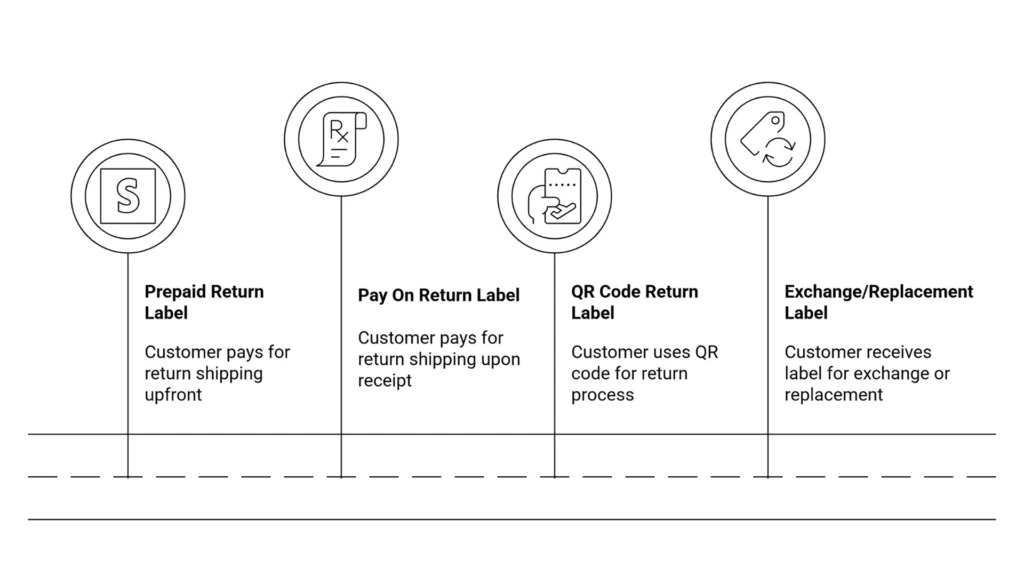
There are various types of return labels used in e-commerce and retail. They are in the list below.
1. Prepaid Return Label
A prepaid return label is a label in which the e-commerce business covers the full return shipping cost in advance. The company attaches the label on the package at the time of ordering. Sometimes the business sends the return label to the customer digitally. So the customer does not need to pay extra money or arrange a courier company to return products. A prepaid return label simplifies the return process. It accurately tracks the returned products and automates refunds to the customer.
2. Pay On Return Label
Pay on return label is a label on which a customer needs to pay for initiating a return request. The business either deducts a certain amount of money from the customer's refund amount or pays during pickup. So the pay on return label reduces unnecessary returns and enhances the operational efficiency of the business. But a money deduction can cause dissatisfaction in customers.
3. QR Code Return Label
A customer receives the QR code instead of the return label and shows it to the courier partner. The partner scans the QR code and enters a few details, and finally, the system generates the return label. This method reduces errors and enables a faster return process. But the courier partner requires active internet access to scan the code and enter details.
4. Exchange/Replacement Label
Sometimes the customer selects exchange or replacement products instead of a refund. The system of the e-commerce business automatically generates the exchange/replacement label and links to both the original order and the new outbound order. The customer either attaches the return label to the package or shows the QR code to the courier. The courier boy picks up the order and brings it back to the warehouse. The staff can verify its condition, quantity, and size. The replacement product is then dispatched to the customer's address.
Why Return Label Accuracy Is Critical?
- Accurate return labels can instantly provide product details and the reasons for which the product has been returned. This reduces the necessity of manual entries.
- A proper address in the return label ensures that the product reaches the right warehouse without any hassle.
- Smooth returns and timely refunds enhance customer satisfaction.
Common Issues And Mistakes In Return Label
There can be a few mistakes in the return label, which can create confusion. Some of the issues are listed below.
1. Wrong Warehouse Address
If there is an incorrect warehouse facility address on the return label, then it will cause a delay in refunds, which can affect customers. The product can get lost because of an incorrect warehouse address.
2. Damaged Or Blurry Code
If the barcode is blurry in the return label, then it cannot be read by the scanner. The warehouse team will annually identify the returns ordered, which may lead to errors or increase return processing time.
3. Customer Confusion Because Of Poor Instructions
If an e-commerce business provides unclear instructions, then it will create confusion among customers. They will place the labels incorrectly or mis-schedule pickups.
4. Missing Order Details
If order details or return reasons are missing, then the inspection of the warehouse will take longer to identify the exact reasons for return. It will delay inventory updates and refunds.
5. Incorrect Courier Mapping
If an e-commerce business assigns a courier that does not provide service to the pickup location or cannot deliver the item to the designated warehouse, then it increases logistics costs and causes a delay in refunds.
6. Not Using QR Codes For High Volume Returns
Using printed return labels increases the effort for customers. QR code simplifies the returns and reduces printing errors.
7. Labels Printed On Low-Quality Material
Thin paper or a weak adhesive return label can tear or fade away during transit. Thus, the inspection team of the warehouse made a delay in identifying the package.
Best Practices For Creating And Using Return Labels
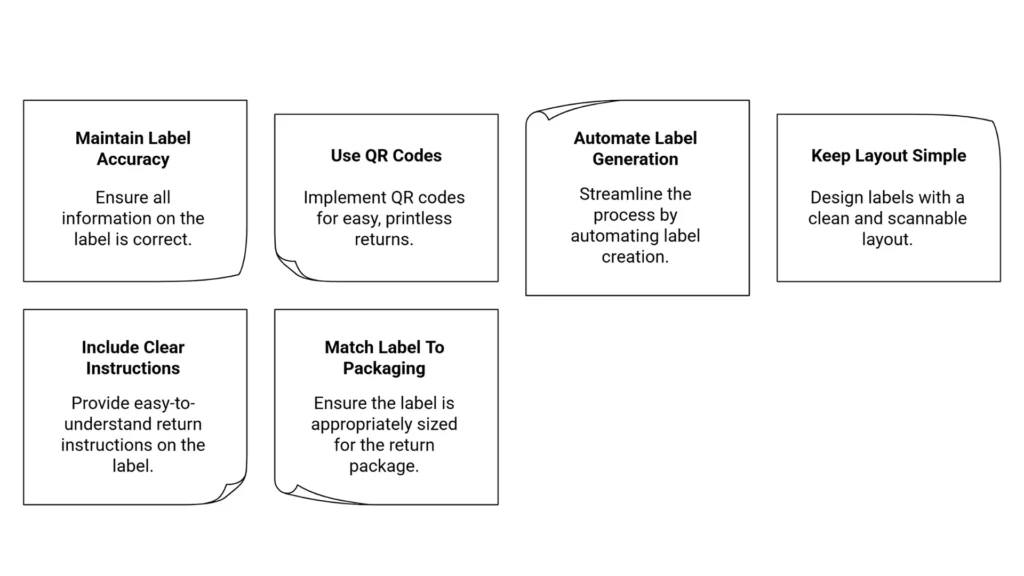
1. Maintain Label Accuracy
The return label should contain all the necessary details like warehouse address, customer address, order ID, and many more. Accurate data prevents misrouting and delays. The warehouse team can scan the returned product and make quick refunds.
2. Use QR Codes For Pintless Return
Printed return labels can cause delays in order processing. It can be challenging to use the printed return label on the package. QR code enables faster return processing and quick refunds.
3. Automate Label Generation
An e-commerce business should generate return labels through OMS or WMS systems. It reduces manual errors, allows real-time tracking, and makes quick refunds.
4. Keep Layout Simple And Scannable
The return needs to have clear fonts and properly spaced barcodes. This will allow scanners to read the labels clearly.
5. Include Clear Return Instructions
The e-commerce business should provide clear instructions on the return label. Clear instructions will guide customers on how to package and attach return labels properly.
6. Match Label To Return Packaging
The packaging should be durable so that it will not get damaged during transit. Again, the return label should be clear and easily scannable throughout the transit.
Automation in Return Label Management
Automations begin when a customer places a return request on the ecommerce website. The system automatically validates the order and selects the correct warehouse and transportation partner for picking up the item. The system even generates the return label or QR code for return processing. Each logistics event gets updated in the OMS and WMS in real time.
Tools and platforms that support return label automation include order management systems, warehouse management systems, ERP, and integration tools. There are various advantages of automation, such as enabling faster order processing and improving customer experience.
How 3PL Partners Improve Return Label Efficiency?
Third-party logistics companies play a vital role in improving return label efficiency. They are as follows.
- A 3PL Company generates return labels using a single controlled system.
- The warehouses of the 3 3PL companies are barcode and QR-enabled, and this speeds up the return processing.
- A 3PL partner integrates with multiple courier partners. The system automatically chooses the courier partner based on the pincode, SLA, cost, and return type.
Conclusion
Return labels play an essential part in the supply chain and logistics industry. Maintaining accurate return labels ensures that they will reach the right warehouse without delays. Businesses should adopt QR codes to eliminate printing errors and manage high-volume returns.