

Table of content:
- What Is An Order Management System (OMS)?
- Why Your Business Need An Order Management System?
- How Does An Order Management System Work?
- Types Of Order Management Systems
- How To Choose The Right OMS For Your Business?
- Mistakes To Avoid While Choosing the OMS
- Best Order Management System In India
- OMS VS WMS VS ERP: What Is The Difference
- Final Words


An Order Management System (OMS) is a digital platform or software that helps businesses to manage and track the entire lifecycle of customer orders. It tracks every movement of an order, from the moment it is placed until its final delivery.
The global e-commerce sales are expected to reach $8 trillion by 2030. Today, customers expect their ordered products to be delivered as soon as possible, efficiently, and cost-effectively. But many e-commerce businesses face challenges in tracking inventories, managing orders and fulfilling them, and handling returns across multiple sales channels. An advanced software order management system tracks stocks in warehouses or fulfillment centers. It streamlines the order fulfillment process, manages returns efficiently, and thus improves customer satisfaction.
What Is An Order Management System (OMS)?
An order management system is a digital tool that collects orders from multiple sales channels and tracks inventory in real time.
Nowadays, most businesses sell their products through e-commerce websites and channels, such as stores and online marketplaces like Facebook and Instagram. Managing inventories across all the channels and handling returns can be quite difficult for a business if it handles them manually. An order management software is an automated software that keeps track of and updates information about the stock in multiple sales channels. It helps in avoiding problems like out-of-stock issues in business. Simultaneously, an OMS software identifies the location for the staff to ship products to the customer. It reduces logistics costs and delivers faster to the customer. Thus, an order management system enhances customer satisfaction and improves brand reputation in the market.
Every department in a business can track and access the order through the OMS software. It even updates customers about their order status and handles the return process if necessary. So OMS saves time and reduces errors in the supply chain process of a business.
Why Your Business Need An Order Management System?
Managing orders across various sales channels manually can lead to errors and lost sales opportunities. Businesses should manage an order management system for the following reasons.
- Centralise Order Processing: OMS consolidates orders from various platforms, including B2C and B2B e-commerce websites, online marketplaces, and physical stores, into a single platform to eliminate confusion.
- Inventory Management: It updates about the real-time stock availability in multiple sales channels and thus avoids the problem of overstocking and out-of-stock issues.
- Decision Making: Businesses can forecast product demand in the near future through OMS software and make crucial decisions.
How Does An Order Management System Work?
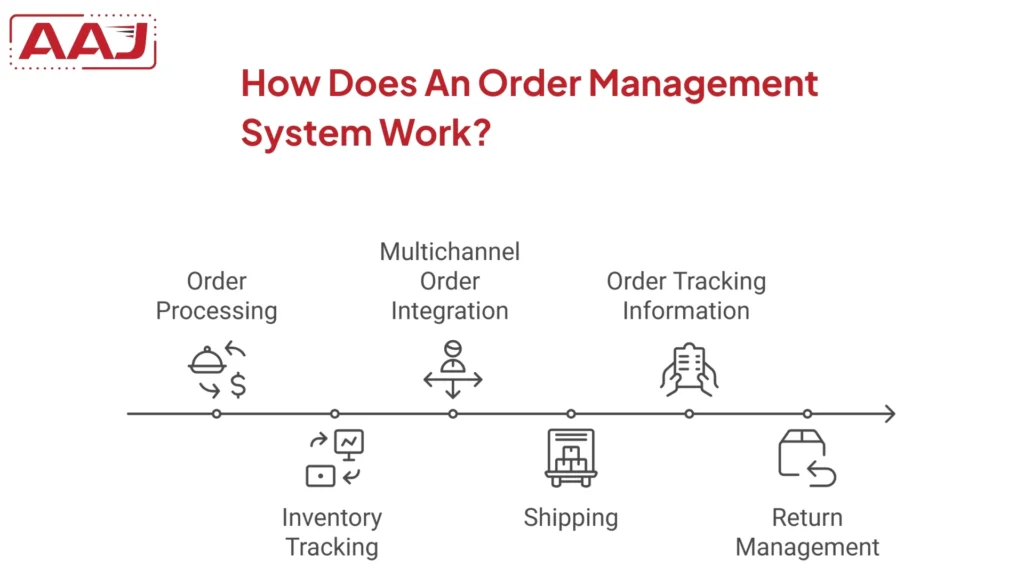
The order management system makes the entire order processing process of a business transparent and streamlined. Automating various stages of order processing can reduce errors and improve efficiency.
The key functions of the OMS order management system are as follows.
1. Order Processing
When a customer places an order, the order management software verifies the order, like product availability and payment details. It provides the most efficient way for delivering products to the customer.
2. Inventory Tracking
The OMS software tracks inventories on various sales channels and prevents overstocking and out-of-stock issues. It helps businesses determine how much stock they have left and notifies them when it's time to restock their inventories.
3. Multichannel Order Integration
Order management software integrates with multiple platforms, such as physical stores, websites, and online marketplaces, into a centralized platform.
5. Shipping
The OMS software coordinates with various shipping providers, assigns carriers, schedules, and shares the delivery details with the customer.
6. Order Tracking Information
The customer receives tracking information about the ordered product, i.e, from shipment to delivery. Customers can track their ordered products at every stage of shipment.
7. Return Management
OMS software even keeps track of returned products and processes refunds quickly to the customers.
Types Of Order Management Systems
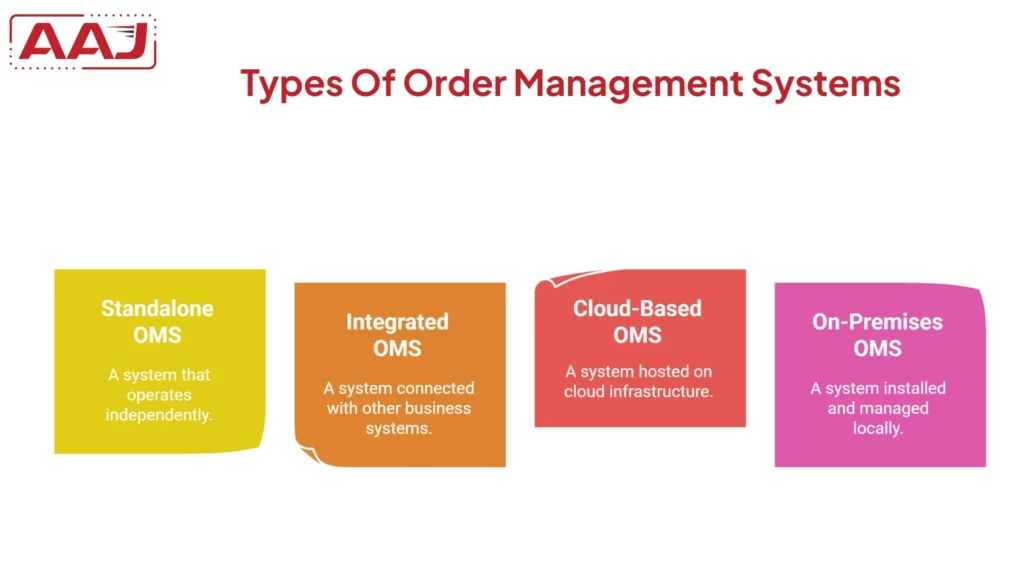
There are various types of order management systems. Here is a list of them below.
1. Standalone OMS
The standalone OMS only handles order processing for the customer. It ensures that every customer order, i.e, from placing an order to delivery, is handled smoothly and efficiently. A business seeking to enhance its order processing can utilize a standalone OMS. It offers numerous features like inventory tracking, shipping management, and order routing. The main benefit of standalone OMS is its ease of use and low cost. However, it has limited integration with other systems.
2. Integrated OMS
Integrated OMS works together with Enterprise Resource Planning and the warehouse management system. It does not manage orders separately. It created a unified environment where all departments know the order processing details. Let's discuss with an example. Whenever a customer orders, the Integrated OMS updates the warehouse management system with the details. The OMS even updates the ERP about the financial records. Here, all the systems, such as WMS, ERP, and multiple sales channels, reflect the same data, making for a faster order fulfillment process. However, it has one significant disadvantage: the implementation cost is relatively high, and proper training is necessary to handle it effectively.
3. Cloud-Based OMS
A cloud-based OMS system allows a business to access data from anywhere. A company can log in a website or app and get updates about the inventory or order details. However, the business needs the internet to access these details. A business has to pay a subscription fee for cloud-based OMS. This allows a company to start and get updated with technology without investing in upfront costs. There is no need for heavy maintenance here. But it has one limitation, i.e, it heavily depends on the internet.
4. On-Premises Order Management System
An on-premises order management system runs on the company's server and computer, rather than in the cloud. This setup will allow a business complete control over the data, security, and customisation. The business will buy the software license and is responsible for installation and management. Whenever a customer places an order, the on-premises order management system updates about the inventory and records transactions. But it has a few drawbacks, like the company having to spend upfront costs for hardware and software.
How To Choose The Right OMS For Your Business?
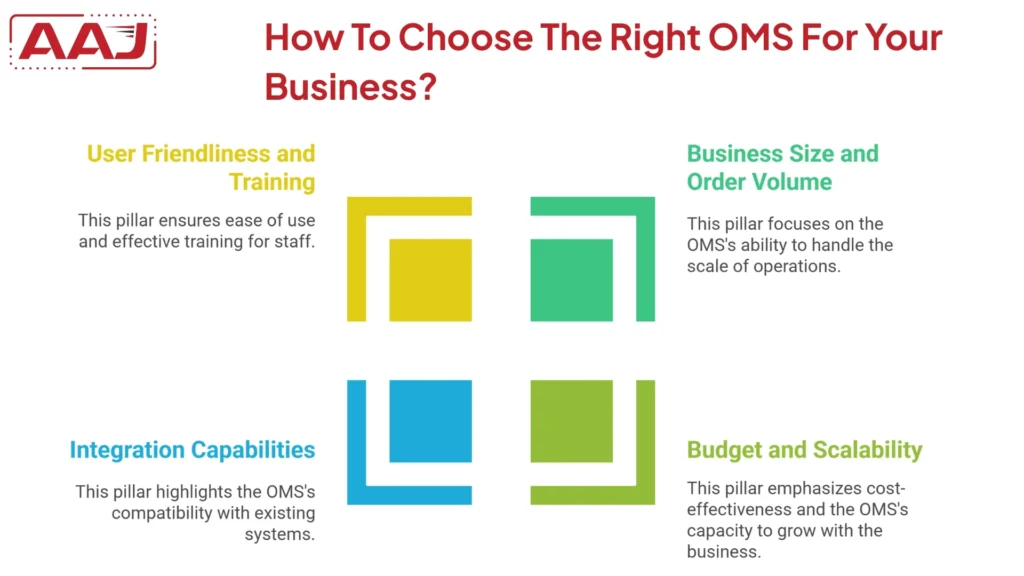
There are various factors that businesses need to consider while choosing the right OMS for their business.
1. Business Size And Order Volume
If your business is small, consider a cost-effective order management system that can manage orders, track inventory, and provide basic reporting. You can choose cloud-based OMS or standalone OMS.
However, if the business handles higher order volumes, it should choose an OMS that supports multichannel integration and provides real-time inventory updates.
2. Budget And Scalability
You should consider both upfront and long-term costs when choosing OMS. It should even scale when your business grows with time.
3. Integration Capabilities
A business should ensure that OMS integrates smoothly with various platforms like Enterprise resource planning, warehouse management system, and customer relationship management.
4. User Friendliness and Training
The OMS should be user-friendly so the business team can easily adopt it. The provider should even provide training regarding installing and usage of OMS.
Mistakes To Avoid While Choosing the OMS
1. Overlooking Integration With Existing Tools
Poor OMS integration can lead to improper data decisions and inefficiencies in 3PL fulfillment. It can even lead to overstocking and understocking issues. Businesses should confirm the details and then make a purchase.
2. Ignoring Customer Service Features
The business should not ignore customer service features at the time of purchase. An OMS should track orders, provide inventory updates, and manage returns to enhance customer satisfaction.
Best Order Management System In India
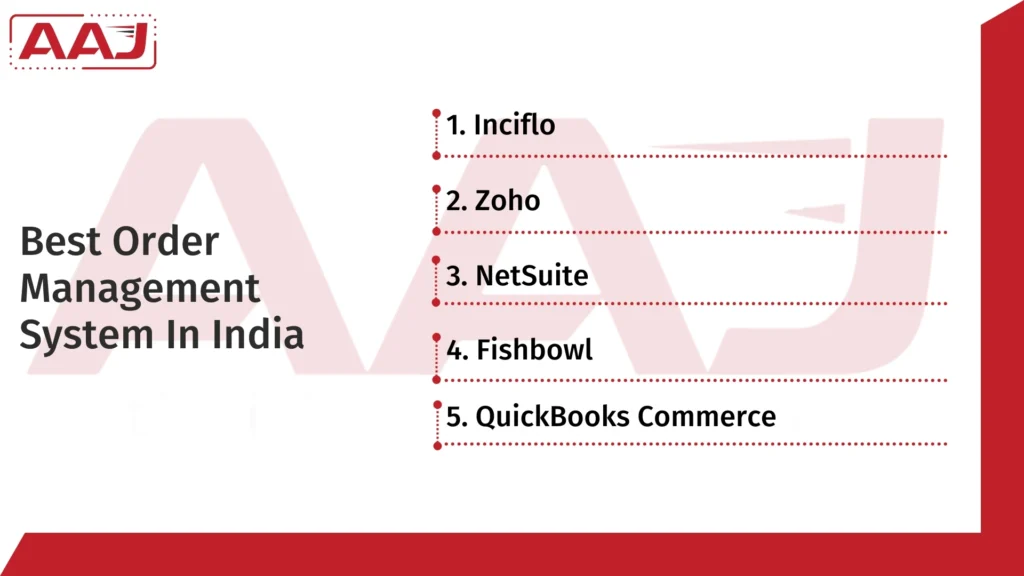
There are various order management systems in the market. Here is a list of a few of them below.
1. Inciflo
It is a cloud-based system designed for businesses of all sizes. The OMS software tracks orders and inventories in real time. Inciflo integrates with accounting and ERP software, enabling companies to make informed decisions.
2. Zoho
Zoho is a robust order management software popular among small and medium-scale businesses. A business can integrate with multiple sales channels, i.e, website, app, and various online marketplaces, and update orders on a centralized platform.
Zoho order management software updates inventory levels, sends order confirmations to customers, and automatically generates invoices.
3. NetSuite
NetSuite is a cloud-based OMS software that automatically updates various aspects, including order processing, inventory control, accounting, and returns management. It even integrates with multiple channels like e-commerce websites and online marketplaces.
4. Fishbowl
Fishbowl is an OMS software for wholesalers and manufacturers. It offers advanced features like barcode scanning to pick up ordered products efficiently. Simultaneously, Fishbowl manages order processing and return management effectively. Fishbowl also integrates with popular e-commerce seller platforms and shipping carriers.
5. QuickBooks Commerce
QuickBooks Commerce is a powerful OMS platform for small and medium-sized business owners. It manages inventories and orders and easily integrates with QuickBooks accounting.
OMS VS WMS VS ERP: What Is The Difference
1. Order Management System
This software provides updates regarding the entire order lifecycle, i.e, from the order placement to delivery and return management.
Features:
- Track orders from multiple sales channels.
- The software does payment confirmation, order processing, and invoicing automatically.
2. Warehouse Management System
It manages warehouse and inventory stored in the warehouse operations efficiently.
Features:
- It tracks inventories in real time in the warehouse.
- It optimises the entire warehouse layout and picking routes.
3. Enterprise Resource Planning
It is a software that helps businesses manage and integrate all the supply chain operations in one system.
Features:
- It integrates various business processes, including finance, accounting, HR, and sales, into a single platform.
- It automates multiple functions, including invoicing, payroll, and budgeting, for the business.
Final Words
An order management system helps businesses manage customer orders from various sales channels efficiently. It does order fulfillment faster and enhances customer satisfaction. Thus, an OMS software improves the operational efficiency of an e-commerce business.