
Table of content:
- Understanding 3PL and Its Importance for Small Businesses
- Why Small Businesses Are Turning to 3PL
- How 3PL Works for Small Businesses
- The Core Functions of a 3PL For Small Business
- Step-by-Step 3PL Working Process For Small Businesses
- Challenges Small Businesses Face Without a 3PL Partner
- Benefits of Using 3PL for Small Businesses
- How to Choose the Right 3PL Partner for Your Small Business
- When Should a Small Business Switch to a 3PL Model?
- Why AAJ Supply Chain Management is a Trusted 3PL Partner for Small Businesses
- The Future of 3PL for Small Businesses
- Conclusion


Over 70% of small businesses outsource part or all of their logistics operations to 3PL providers to improve efficiency and scale faster. For small business owners, logistics can quickly become a challenge. Managing storage, packaging, and delivery while keeping costs low often stretches limited resources. This is where 3PL for small business—third-party logistics—comes in as a game-changer.
By offering professional warehousing, fulfillment, and transportation support, 3PL providers help small businesses stay competitive against bigger players. With rising fuel costs, labor expenses, and delivery demands, reliable small business logistics providers are not just convenient—they are essential.
Understanding 3PL and Its Importance for Small Businesses
Let's understand 3PL for Small Business in better detail through the information we have provided below:
What is 3PL (Third-Party Logistics)?
Third-party logistics (3PL) refers to outsourcing supply chain and logistics operations to an external company who manages storage, transportation, and fulfillment on behalf of a business.
To simplify:
- 1PL (First-Party Logistics) – Businesses handle storage and delivery themselves.
- 2PL (Second-Party Logistics) – You hire a carrier or shipping contractor for transport only—storage and inventory management handled by businesses themselves.
- 3PL (Third-Party Logistics) – On behalf of businesses, a logistics company manages warehousing, shipping, and returns, offering an end-to-end supply chain service.
3PL for small businesses is the best option, as it helps them to spend less time on logistics headaches and more focus on marketing, sales, and product quality.
Why Small Businesses Are Turning to 3PL
The logistics operations and processes have changed dramatically in recent years. Online shopping and customer expectations for fast, low-cost delivery have put pressure on small companies. The best 3PL for small business provides the flexibility and customize logistics solutions. 3PL companies offer scalable warehouse solutions, optimized freight routes, and professional ecommerce fulfillment services without the overhead of running a warehouse.
How 3PL Works for Small Businesses
When small businesses partner with a 3PL company, they outsource their warehouse and logistics operations to experts who already have the expertise, infrastructure and technology. The 3PL service provider for small businesses manages warehouse space, picks and packs products, and arranges timely shipping. 3PL partners also handle return logistics and offer tracking systems for real-time visibility.
The Core Functions of a 3PL For Small Business
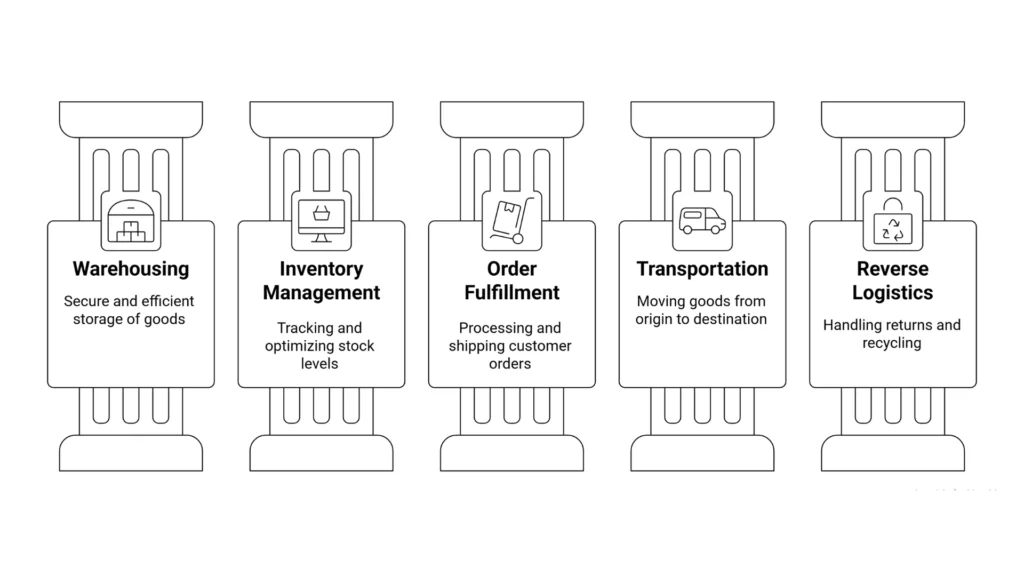
- Warehousing: Secure and scalable storage space based on seasonal or business fluctuations.
- Inventory Management: Real-time inventory tracking, tracking stock levels, forecasting demand, and preventing overstocking or shortages.
- Order Fulfillment: Accurate picking, packing, and dispatching of customer orders.
- Transportation: Managing shipments to ensure timely and cost-effective deliveries.
- Reverse Logistics: Handling product returns or exchanges efficiently.
With these services, a third-party logistics for SMEs acts as an extension of the business, creating a seamless supply chain experience for both businesses and customers.
Step-by-Step 3PL Working Process For Small Businesses
A 3PL for startup or small business follows the below step-by-step process:
- Receiving: Businesses send inventory to the 3PL warehouse, where it is inspected and recorded in the system.
- Storing: Goods are organized and stored safely for easy retrieval.
- Picking: When an order arrives, staff pick the right product from storage racks.
- Packing: Orders are packaged with care, often customized to meet brand preferences.
- Shipping: The 3PL arranges delivery through its transportation network.
- Returns: Customers can send back products directly to the 3PL for inspection and restocking.
This 3PL process ensures consistency, accuracy, and speed—all required for building a strong brand image and customer trust.
Challenges Small Businesses Face Without a 3PL Partner
Small businesses that attempt to manage the supply chain entirely on their own often face multiple hurdles:
- Limited Storage and Fulfillment Capacity: Managing physical inventory can restrict growth.
- Slower Order Turnaround: Delays occur when operations are handled without professional systems.
- High Logistics and Manpower Costs: Hiring staff and maintaining warehouses can drain profits.
- Poor Visibility in Supply Chain Operations: Lack of tracking and analytics makes it hard to predict or address issues.
Without a 3PL, small business logistics can quickly become chaotic, limiting expansion opportunities.
Benefits of Using 3PL for Small Businesses

1. Cost Optimization and Scalability
A 3PL for small business reduces overhead costs by eliminating the need for dedicated warehouses and delivery fleets. You pay only for the space and services you use because of the shared warehouse model. As the business grows, you can easily scale logistics operations without major investments.
2. Faster Deliveries and Better Customer Experience
3PLs use established transport networks and efficient routing software to deliver faster. Shorter delivery times improve customer satisfaction and encourage repeat purchases.
3. Access to Advanced Technology
Leading 3PLs use software for real-time tracking, inventory visibility, and performance reporting. This technology gives small business owners data-driven insights into their logistics activities. It helps businesses to do inventory planning according to market demand.
4. Focus on Core Business Activities
By outsourcing warehousing and transportation, business owners can direct energy toward product innovation, marketing, and expanding customer reach.
How to Choose the Right 3PL Partner for Your Small Business
Key Factors to Consider
- Service Range: Ensure the provider offers warehousing, transportation, and reverse logistics.
- Industry Experience: A 3PL familiar with your industry, product type and volume provides better results.
- Technology Integration: Check for real-time tracking systems and software integration options.
- Scalability: Your partner should grow with your business needs.
- Customer Support: Responsive assistance matters, especially during peak seasons.
Questions to Ask Before Partnering
- How flexible are your storage and delivery services?
- What technology do you use for order tracking and reporting?
- Can you handle seasonal fluctuations or international shipping?
- How do you manage product returns and damaged goods?
Mistakes to Avoid When Choosing a 3PL For SMEs
- Choosing based solely on cost without checking 3PL service quality.
- Ignoring contract details such as insurance, damage claims, and turnaround times (TAT).
- Failing to check references or reviews.
Selecting the best 3PL for small business means finding a balance between cost, capability, and reliability.
When Should a Small Business Switch to a 3PL Model?
You might consider moving to a 3PL setup if:
- You're running out of storage space for inventory.
- Deliveries are becoming slower as order numbers rise.
- Logistics and manpower costs are cutting into profits.
- You're struggling to track stock movement accurately.
- Customers are expecting faster, more reliable shipping.
At this stage, partnering with a professional 3PL for small business can relieve internal pressures and boost operational performance.
Why AAJ Supply Chain Management is a Trusted 3PL Partner for Small Businesses
AAJ Supply Chain Management is a leading 3PL provider known for its dependable and reliable warehousing service and flexible 3PL logistics solutions. With modern warehouses and advanced in-house WMs and TMS, AAJ helps startups and SMEs streamline their logistics through services like storage, real-time tracking, and nationwide delivery.
Their tailor-made approach ensures small businesses can scale smoothly without worrying about costs, warehousing space or delivery management. The team's experience across industries—from Publishers, FMCG to e-commerce—makes AAJ one of the most trusted names for third-party logistics for SMEs in India.
AAJ's strength lies in understanding the challenges small businesses face and developing logistics solutions that reduce costs, improve operational accuracy, and ensure faster deliveries. Whether you're a startup or a growing e-commerce brand, AAJ offers a dependable partnership that simplifies your supply chain.
The Future of 3PL for Small Businesses
The future of logistics for small businesses lies in technology, sustainability, and customization. With e-commerce expanding rapidly, customer expectations for same or next-day delivery and transparent tracking will keep growing. Modern 3PLs are investing in automation, AI-based forecasting, and eco-friendly transport to meet these demands.
For small companies, this evolution means access to world-class infrastructure without massive investment. The rise of shared warehousing and digital fulfillment hubs also allows businesses to compete in broader markets. In the coming years, 3PL partnerships will become a core growth strategy for businesses, not just an option.
Conclusion
As operational demands grow, outsourcing logistics has become a smart move for small enterprises. The 3PL for small business model provides cost efficiency, flexibility, and professional support for end-to-end supply chain management. By freeing entrepreneurs from day-to-day logistics stress, it enables them to focus on growth and customer satisfaction.
Whether you're an emerging startup, a local retailer, or an e-commerce company in India, choosing a trusted partner like AAJ Supply Chain Management can streamline your logistics and supply chain and set the stage for long-term success.