
Table of content:
- What Is A Warehouse and Godown?
- Difference In Warehouse And Gowdown
- Why Choosing The Right Storage Facility Matters - Warehouse Or Godown?
- Key Factors To Consider Before Choosing A Warehouse And Godown
- When Should You Choose A Godown?
- When Should You Choose A Warehouse?
- Cost Comparison: Warehouse Vs Godown In India
- Final Words


Storage plays an integral part in the supply chain process of a business. The storage solutions include a warehouse and godown. Both of them store inventories, but their features and functionality differ a lot. Warehouses are usually present in urban areas and are equipped with modern technology. It utilises automation to enhance the order fulfillment process and minimise errors. But godowns are present in rural areas and can safely store goods for a specific period of time.
What Is A Warehouse and Godown?
Warehouse
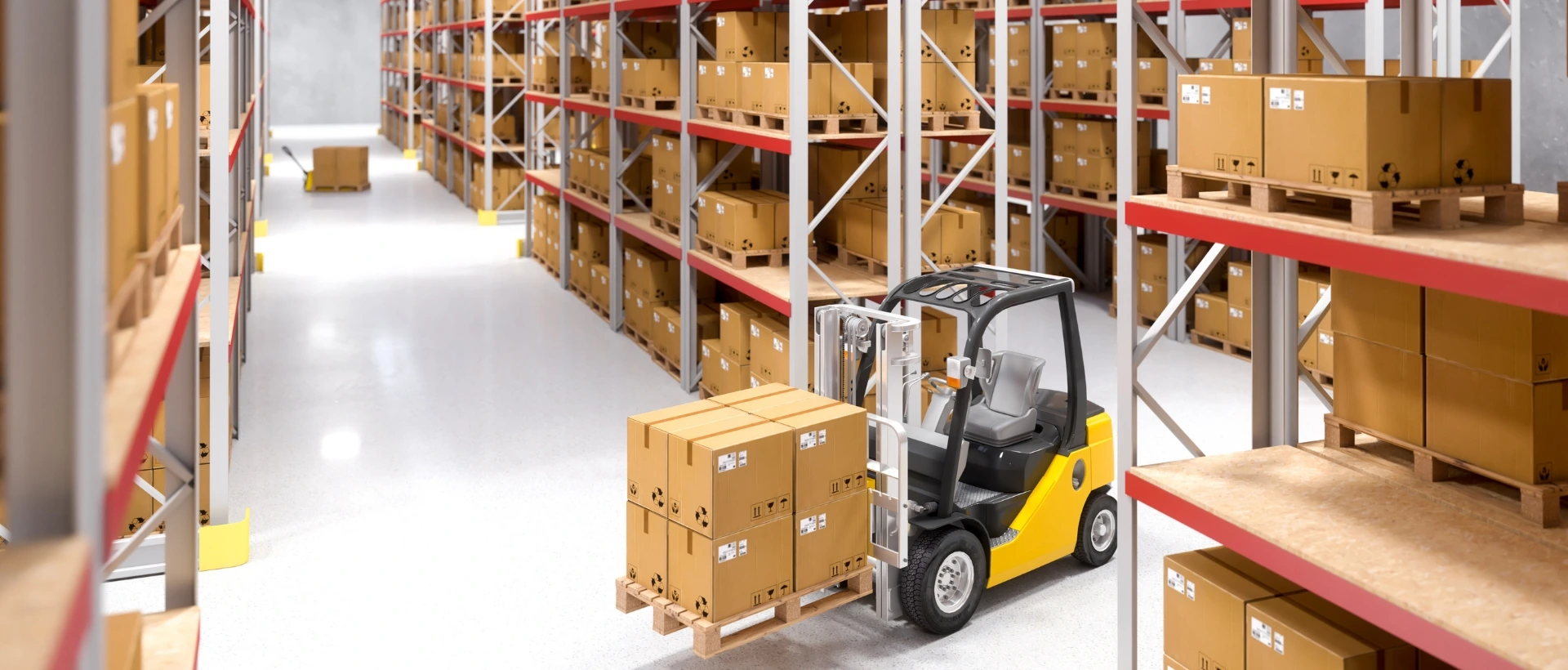
A warehouse is a large, commercial building designed solely for storing goods. They play a crucial role in the business supply chain process.
Today, most of the warehouses leverage advanced technology like WMS and IMS. The software optimises the entire warehouse layout and enhances the ecommerce order fulfillment process. Simultaneously, reputable businesses are utilising robotics and automation to minimise human errors and expedite order fulfillment processes.
Companies keep inventories in the warehouses closer to customers so that they can make product delivery faster and enhance customer satisfaction.
Common Uses Of Warehouse
- They are used for short-term or long-term storage.
- Warehouses update inventories in real-time and avoid problems like overstocking and out-of-stock issues.
- It holds both raw materials and finished goods.
- It can even store goods in temperature and humidity-controlled environments.
Godown
Godowns are simple buildings or rooms for storing goods or products. However, they do not utilize advanced software to optimize their layout or expedite product delivery. Traders, wholesalers, or small enterprises usually store goods in a Godown in bulk quantities. You will usually find godowns in rural or semi-urban areas.
Common Uses Of Godown
- It stores raw materials or finished goods in bulk quantities.
- Godown stores goods till they are transported to the retailer.
- It stores products that do not require any specialised humidity or temperature control.
Difference In Warehouse And Gowdown
| Features | Warehouse | Godown |
| 1. Usage | 1 . Ecomemce Companies, industrialists, small and medium enterprises use a warehouse for storing inventories. | 1. Traders and small business owners usually store goods ina Godown. |
| 2. Technology | 2. Usage of robots or automated systems | 2. All processes are carried out manually. |
| 3. Security | 3. Most of the warehouse has CCTV surveillance for 24 hours. So there are fewer chances of theft. | 3. Godowns usually do not have any security systems for safeguarding inventories. |
| 4. Location | 4. Warehouses are usually found in industrial or commercial areas. | 4. They are usually present in rural or semi-urban areas. |
| 5. Scalability | 5. Warehouses are scalable, i.e, they can accommodate more product when the business expands in the future. | 5 . Godowns are really scalable. |
| 6. Cost | 6. The cost of storing goods in warehouses is usually high because of advanced features. | 6. The cost of storing goods in a godown is usually low compared to warehouses because it does not utilise any advanced technology. |
Why Choosing The Right Storage Facility Matters - Warehouse Or Godown?
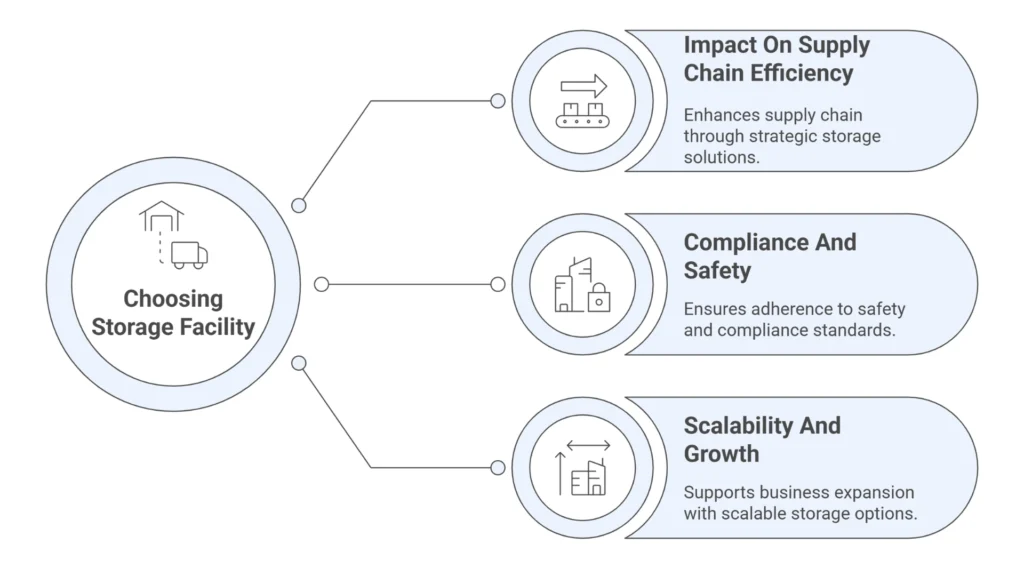
1. Impact On Supply Chain Efficiency
The choice between a warehouse and godown directly affects supply chain operation efficiency. Most of the warehouses use advanced technology for faster order delivery and tracking inventories. Companies seeking to deliver products faster to customers and enhance their market reputation should consider selecting a warehouse. Warehouse storage can enhance the supply chain efficiency of a business.
Godowns are storage spaces that do not leverage advanced technology. They cannot fulfil orders faster for your customers like a warehouse.
2. Compliance And Safety
Warehouse and godown storage facilities should comply with the legal and industrial regulations. Warehouses follow strict measures like fire safety, temperature control, and insurance requirements. However, a godown does not follow these safety measures. So storing perishable goods can be risky in a godown.
3. Scalability And Growth
Most warehouses offer scalable storage solutions. It means the system can accommodate products as the business grows in the future.
But godown usually has limited space. It cannot accommodate products when the business expands in the future.
Key Factors To Consider Before Choosing A Warehouse And Godown
There are a few factors that businesses need to consider while choosing a warehouse and godown.
1. Understand The Business Needs
You should first consider your business requirements and then decide to store goods either in a warehouse or godown. Warehouses usually suit businesses that require organised storage and delivery of products faster.
However, a godown suits businesses that require a secure space for storing goods for a temporary period.
2. Nature Of Goods
If a business wants to store perishable or fragile goods, then a warehouse is the best option.
However, if a business requires non-sensitive goods, such as grains, for storage, it can opt for a Godown.
3. Business Size And Scale
If you are a small business owner or trader, then you should prefer a Godown for storing goods and products. Godowns are usually cost-effective, and a business owner can store goods for a temporary period. But medium or large-sized enterprises can store goods and products in warehouses. They are a bit costly, but they can store bulk products and handle returns. Warehouses even offer scalable fulfillment solutions to businesses.
4. Budget Constraints
If you have tight budget constraints, then you should choose a godown for storing inventories. Warehouses charge higher rent for storing goods. But they leverage advanced technology and automation, which can speed up the order fulfillment process.
5 . Need For Technology And Automation
Godown does not leverage advanced technology. The staff handles the inventories manually. However, warehouses are equipped with modern technology, including barcode scanning, automation, and a warehouse management system.
When Should You Choose A Godown?
- If you are a small trader, wholesaler, or shopkeeper and want to store goods in a secure space, then a Godown is the best option.
- If your business deals with seasonal goods, then a godown is the best option.
- If you have tight budget constraints, a business owner should consider storing their goods and products in a Godown.
- If you do not require advanced software like barcoding or automation while storing goods, then a godown is the best option.
When Should You Choose A Warehouse?
- Warehouses are usually suitable for ecommerce Companies, FMCG(Fast-moving consumer goods), pharmaceutical, and export businesses. For example, e-commerce companies like Myntra or Bigbasket require faster delivery of products to customers and need to handle returns efficiently, which a warehouse can effectively manage. Simultaneously, your pharmaceutical products require a warehouse that can provide a temperature-controlled environment for storage.
- If your business requires real-time inventory visibility, barcode scanning, or a warehouse management system for managing inventories, then the warehouse is a good option.
- If you expect your business to grow in volume and expand geographically, then a warehouse is the best option for storage.
- When a business requires 24-hour CCTV surveillance, along with fire safety, cold storage, or special zones for storing hazardous goods, it should choose a warehouse for storage.
Cost Comparison: Warehouse Vs Godown In India
Godowns are typically priced between Rs 5 and Rs 50 per square foot in India. If we talk about a warehouse, then it costs Rs 15 to Rs 60 per square foot in India.
Final Words
Both warehouse and godown serve a single purpose, ie, to store goods of a business. But warehouses use advanced technology for storing goods. They are sophisticated and optimize the order fulfillment process. But they are a bit expensive. Simultaneously, if we talk about godowns, then they are simple, cost-effective, and suitable for basic storage. A business needs to understand its requirements and analyse its financial condition, and choose a warehouse or godown for storing its inventory.
;;;;;