
Table of content:


Some businesses manage their supply chains smoothly, while other businesses face delays and stock issues. The difference usually lies in where they store their goods. Public warehouses serve multiple companies, but a private warehouse offers exclusive control and customized facilities. A private warehouse allows businesses to design storage as per their needs. For companies focused on efficiency, consistency, and customer trust, a private warehouse is more than a storage facility; it is a strategic advantage.
Warehouses are designated facilities where a business can store its inventory till customer orders them. There are various types of warehouses, like public, shared, or private warehouses. A particular business owns a private warehouse and has complete control over the warehousing operations, like picking, packaging, and shipping. There is a high level of security here. So there are fewer chances of inventory theft in this warehouse.
What is a Private Warehouse?
A private warehouse is a storage facility that is owned and operated by a particular business. The business stores its inventories in the warehouse and tracks them from time to time to avoid overstocking and out-of-stock issues. A private warehouse allows a company to customize the layout according to its requirements. It even ensures proper handling and storage of goods.
Large enterprises, manufacturers, and distributors usually do storage and fulfillment on their own. But it is not possible for small and medium enterprises because it requires a high initial investment for purchasing land, building a warehouse, managing staff, and buying heavy equipment like forklifts.
Private warehouse example
Let us discuss a private warehouse with an example. Amazon has its own warehouse and fulfillment centers in various locations in India. It manages its own inventories and supply chain effectively. Simultaneously, Amazon utilises advanced technology and delivers products faster to the customer.
Different Types Of Private Warehouse
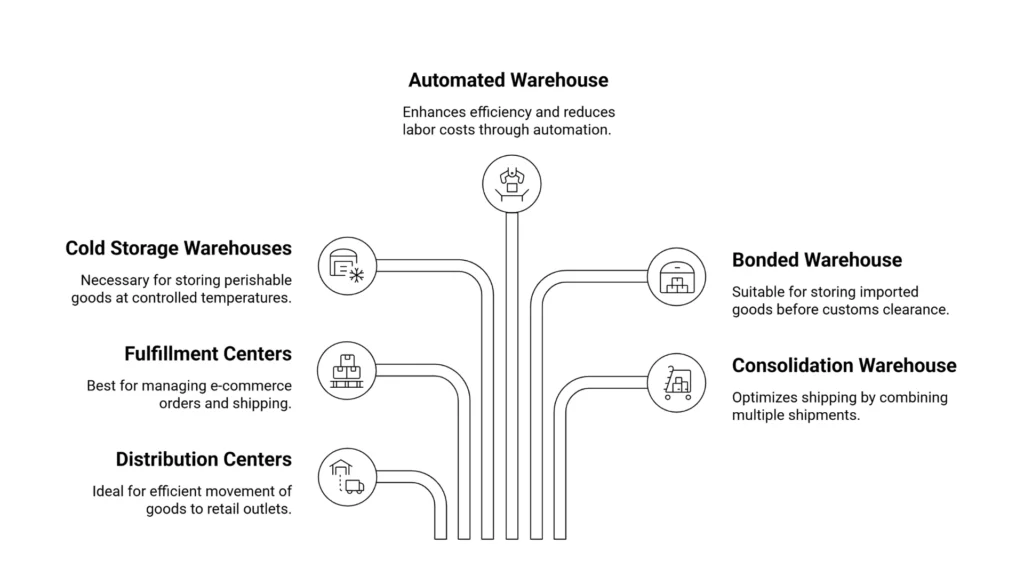
There are various types of private warehouses.
1. Distribution Centers
Distribution centers are a special type of private warehouse that stores goods for selling to retailers, wholesalers, or directly to customers. They are usually present closer to target markets to ensure faster deliveries.
2. Fulfillment Centers
Most of the e-commerce Companies own fulfillment centers for storing their inventory. The fulfillment centers are responsible for order picking, packaging, and shipping of products to customers.
3. Cold Storage Warehouses
These types of private warehouses have special refrigerated warehouse facilities for storing perishable goods like fruits and vegetables or pharmaceutical products. Cold storage warehouses maintain a specific temperature to preserve the quality of the products.
4. Automated Warehouse
An automated warehouse has various advanced features like AI, data analytics, robotics, a warehouse management system, and many more. It enhances the order fulfillment process, reduces errors, and improves the supply chain efficiency.
5. Bonded Warehouse
A bonded warehouse allows the storage of imported goods without paying customs duty immediately. A business that does frequent international trade usually utilises a bonded warehouse.
6. Consolidation Warehouse
It is a type of warehouse where the staff receives goods from multiple suppliers and then combines them into a single delivery. It reduces transportation costs and the hassle of delivering many single deliveries.
Benefits of Private Warehouse
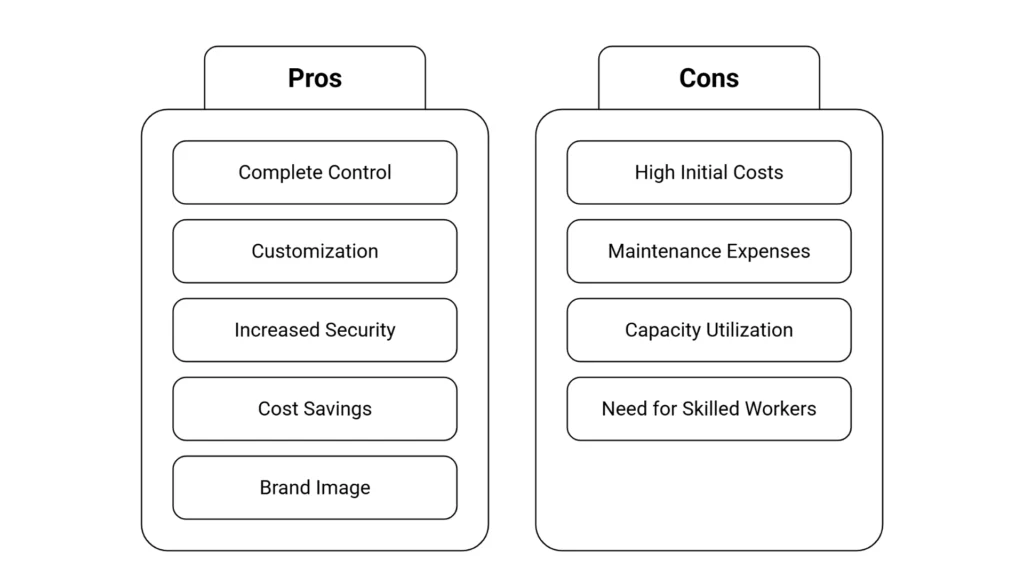
The benefits of a private warehouse are as follows.
1. Complete Control
The business owner has complete control over the logistics operations in the private warehouse. It handles goods and products and stores them in designated places according to its needs.
2. Customization
The business can customize the warehouse layout and facilities according to its requirements. For example, the business can have a temperature-controlled space in the private warehouse if it requires storing perishable or pharmaceutical products.
3. Increased Security
A private warehouse allows only one business to store inventory. This increases security and reduces the chances of theft and damage to the goods and products stored in the warehouse.
4. Long-Term Cost Savings
It requires a high initial investment to have a private warehouse. But at the same time, it saves the cost of the business in the long term. The business does not have to pay rent for storing goods in a public warehouse.
5. Improves Brand Image
The private warehousing allows the business to improve its brand image and reputation in the market. A business can have consistency in product quality and packaging, and enhance customer satisfaction.
Challenges Businesses Face In Private Warehousing
There are a few challenges that even a business faces in private warehousing.
- High Capital Investment: Private warehousing requires high capital investment. The business needs to purchase land and construct a warehouse.
- Maintenance Costs: A business needs to spend more money on maintenance costs for a private warehouse. For example, it has to manage utilities, staff, and do repairs and renovations from time to time, which involves a lot of costs.
- Capacity Utilization: Demand can fluctuate with time. Lower demand for the product can lead to underutilization of spaces inside the warehouse. It can cost more money for a business in such times.
- Need for Skilled Workers: A business needs skilled workers for managing warehouse operations and the utilization of advanced technology. But hiring qualified workers and retaining them can be challenging for a business.
Difference Between Private and Public Bonded Warehouse
| Features | Private Bonded Warehouse | Public Bonded Warehouse |
| Ownership | A single business owns and operates it. | The government or government-licensed agencies own it. |
| Usage | A single Company stores its inventories in a private bonded warehouse. | Multiple businesses store their inventories in public bonded warehouse. |
| Control | The owner has full control over the layout and warehousing operations. | Businesses have limited control over the warehousing operations and layout. |
| Cost | The business has to make a high capital investment in land and building a warehouse. | The business does not have to spend money on buying land or building a warehouse. The business has to spend money only on the storage space. |
| Best for which business | It is best for large enterprises that manage high volume of goods. | It is best for small and medium enterprises. |
Private Or Shared Warehouse: Which One Is The Best For Your Business?
A single business owns a private warehouse and manages all the supply chain operations independently. It can do customization if necessary and improve brand image in the market. But a business needs to spend more money initially to have a own warehouse.
A third-party logistics company manages a shared warehouse. Here, multiple businesses share the same storage space. But the business does not have to spend money on upfront costs. The shared warehouse even leverages advanced technology like a warehouse management system, which enhances the supply chain efficiency. But here, a business has limited control over the order fulfillment process.
Choosing a private or shared business depends on various factors. Suppose a company has a high volume of inventory and receives bulk orders constantly, and wants to have complete control over the warehousing operations. In that case, it should choose a private warehouse. However, the business also needs to have high capital for investing in land, building a warehouse, and managing staff.
But if the business does not have much money and the product demand is seasonal or on particular holidays, then it should choose a shared warehouse.
Final Words
A private warehouse is an advantage for a business if it has a constant high volume of goods demand in the market. But simultaneously, the company needs to have enough money for the construction of the warehouse and its management. A slight mismanagement or inability to adopt advanced technology can slow down the order fulfillment process and have a negative impact on customers.
;;;;;