
Table of content:


E-commerce returns are a challenge for ecommerce businesses worldwide. The global e-commerce return market size is $400 billion and grows by 10-15% yearly. If we talk about India, approximately 10-20% of the online purchases are returned, costing businesses billions annually.
Returns are an inevitable part of the supply chain process. Inefficient return handling can lead to higher costs and slower restocking. Businesses are adopting clear return policies or partnering with a third-party logistics provider to streamline the return process. The 3PL logistics companies have sufficient warehouse space to handle returned items. They even use advanced technology to manage the return process efficiently and improve the supply chain process.
What Is Ecommerce Returns?
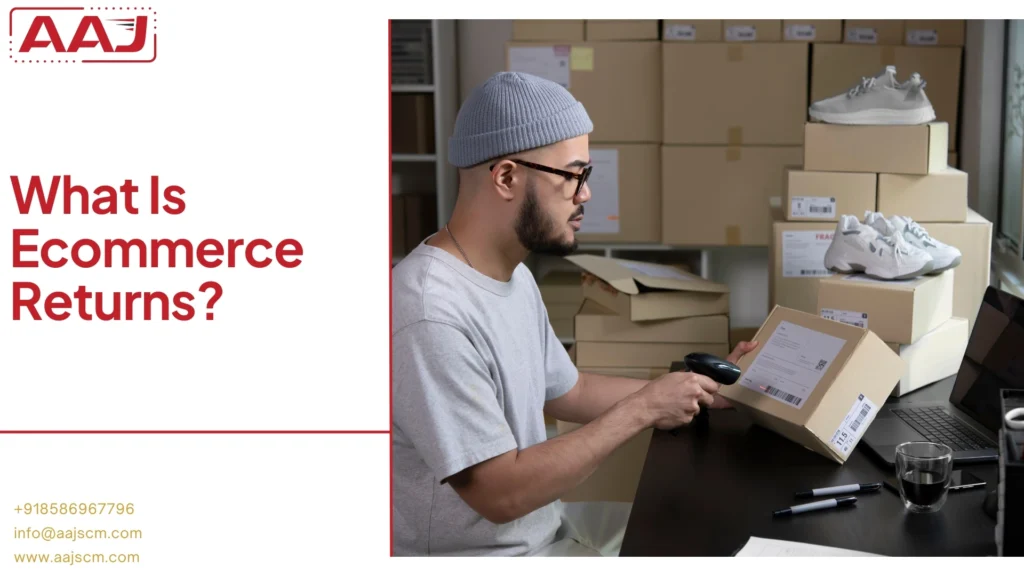
An ecommerce return is a process where a customer returns an ordered product to the ecommerce website.
Sometimes, the customer does not like the product ordered or delivered by the e-commerce business. The customer places a return request on the ecommerce website. The reason for returning the product can be receiving defective or wrong items. The returned product comes back to the retailer or manufacturer. The team inspects the product and decides whether to refurbish, repair or recycle.
Different Types Of Ecommerce Returns
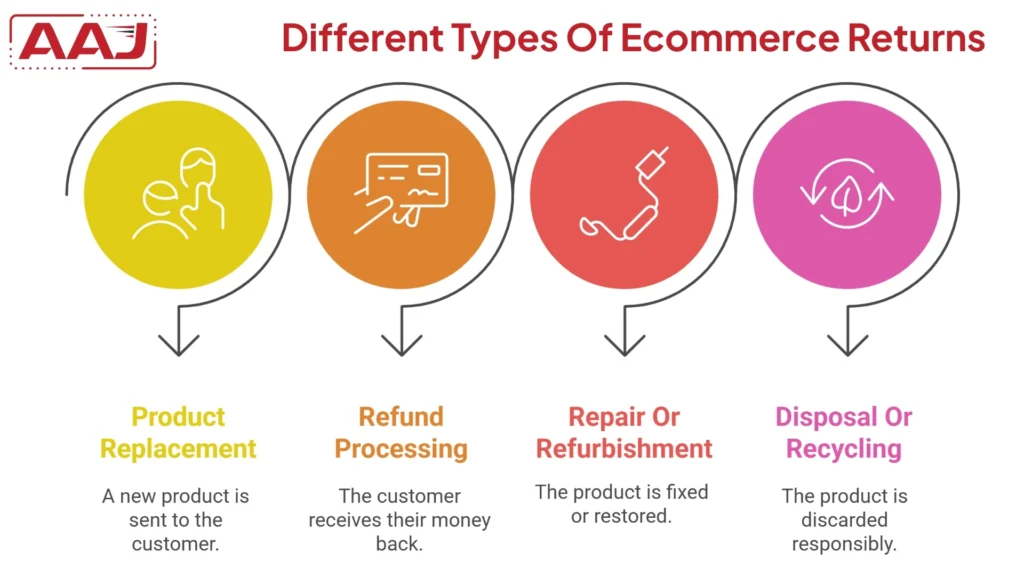
Here is a list of different kinds of ecommerce returns.
1. Product Replacement
Here, the customer receives a product of the wrong size or a defective product and thus places a return request on the e-commerce website. The Company replaces it with a product of the correct size or a good product.
2. Refund Processing
The customer returned the ordered product and is requesting a full refund. The ecommerce company does the refund after receiving the product. The Company does either a partial or a full refund, depending on the product's condition.
3. Repair Or Refurbishment
The ecommerce company received the returned product and inspected it thoroughly. Depending on the product's condition, the decision is made to repair or refurbish. This process reduces wastage and saves the cost of the e-commerce business. It allows the product to be resold to the customer.
4. Disposal Or Recycling
The e-commerce company receives the returned product, inspects it, and then decides to dispose of it or recycle it if the staff cannot repair it. Today, most e-commerce businesses dispose of the product in an eco-friendly manner.
Why Ecommerce Returns Matter More Than Ever?
Customer expectations for the ordered product are increasing daily. E-commerce businesses need to handle the return process more efficiently today to improve brand image in this competitive world and meet customer expectations. Today, easy return policies have become a deciding factor for the customer when buying a product from an e-commerce store.
1. Impact On Profit Margins
Returns can significantly affect the profitability of the e-commerce business. E-commerce return management involves recycling, repackaging, inspection, and other related processes. If the Company does not manage the return processes efficiently, it can erode the profit margins.
2. Effect On Brand Reputation
A smooth and hassle-free return process can improve brand reputation in the market. Customers want to purchase the product from an e-commerce website that handles the return process efficiently and offers a quick refund. Simultaneously, if the e-commerce company handles the return process very slowly or in a complicated manner, customers will not want to purchase the product from the website again.
Common Challenges In E-commerce Return Management
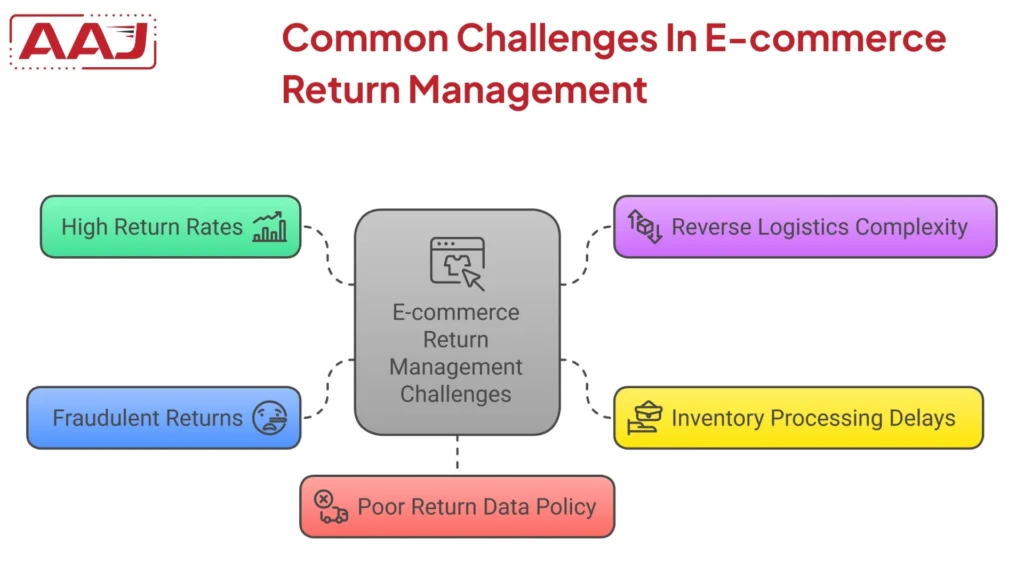
There are a few challenges in e-commerce return management. Here is a list of them below.
1. High Return Rates In Certain Categories
High return rates exist in a few categories, such as fashion, footwear, and electronics. For example, customers want to return dress material or footwear if they receive the incorrect size. The operational cost increases when an e-commerce business manages these returns frequently.
2. Reverse Logistics Complexity
Reverse logistics involves a complex process because customers return products for various reasons, such as receiving a defective product, the wrong size, or simply changing their mind.
The business also has to handle reverse logistics from various geographical areas, increasing the Company's transportation costs.
3. Inventory Processing Delays
Delay in inspecting the product or restocking in the warehouse during the reverse logistics process can cause missed resale opportunities. Slow processing of the reverse logistics process can adversely affect the business's supply chain efficiency.
4. Fraudulent Returns
Some customers misuse the return policies of the e-commerce business. They use the products and then return them to the Company. Sometimes, the customers return damaged products to the Company. These activities are challenging to detect until the Company does a robust inspection process of the returned items.
5. Poor Return Data Policy
Certain e-commerce businesses do not analyse the actual reason for returning products. Thus, they miss opportunities to improve the product's quality.
E-commerce Return Solutions To Overcome Challenges
1. Clear And Customer-Friendly Return Policies
An e-commerce business should provide transparent and customer-friendly return policies to reduce customer misunderstandings.
2. Technology Integration
Businesses can use advanced technology like barcode scanning and automation to streamline reverse logistics.
3. Efficient Reverse Logistics Network
An e-commerce business can partner with a third-party logistics provider to efficiently handle the return process and reduce transportation costs.
4. Product Quality Control Before Shipment
The e-commerce business should properly check the product before dispatching it to reduce return rates.
5. Data Driven Decision Making
The business should analyse the reasons for return trends, study product feedback, and then take steps to improve the product.
Returns Best Practices For Business Owners
- Customer Communication: The e-commerce business should update customers about the return process through email or SMS.
- Automation: The business should utilize advanced technology like return management software to reduce manual errors.
- Pre-Sale Transparency: The Company should provide accurate product descriptions and website images to reduce return rates.
- Easy Return Process: The Company should provide clear and simple return forms to the customer to avoid confusion.
- Sustainable Return Handling; The business should utilize eco-friendly options for recycling methods or disposing of products.
3PL Advantage In Ecommerce Returns
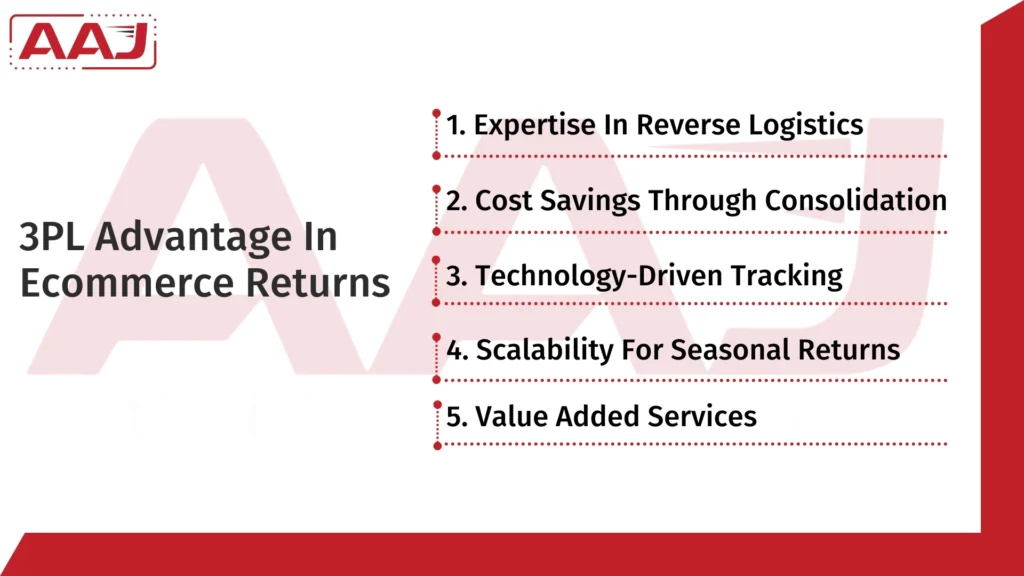
An e-commerce business can partner with a third-party logistics provider to streamline the return process. It is because of the following reasons.
1. Expertise In Reverse Logistics
3PL companies are experts in handling return processes, such as picking products from the customer, inspecting them, and then restocking or recycling based on the product condition.
2. Cost Savings Through Consolidation
A reputed 3PL company combines multiple return items of different customers into a single shipment and thus reduces fuel and shipping costs.
3. Technology-Driven Tracking
Most of the reputed 3PL companies have an advanced tracking system that provides real visibility of the returned products. They provide timely customer updates about their return product and refund process.
4. Scalability For Seasonal Returns
Return volumes can increase during a particular season or holiday. 3PL Companies has enough space in the warehouse to handle the returned items.
5. Value Added Services
A 3PL Company offers value-added services like repackaging, refurbishment and recycling. It helps a business to maintain sustainable goals.
Final Words
The ecommerce market is expanding rapidly in India. Research says that it will reach almost $325 billion by 2030.Return volumes also grow exponentially with the rise in online product sales. Many studies show that 92% of customers will want to purchase products from an e-commerce Company that offers easy returns and quick refunds. The e-commerce Company can partner with a third-party logistics provider to streamline the product's return process.