
Table of content:


The Indian e-commerce industry was valued at US$125 billion in 2024. Researchers predict that the industry will grow to nearly US$345 billion by 2030. It reflects a compound annual growth rate of nearly 15%.
Running an e-commerce business is both exciting and challenging. But it poses various challenges when the sales volume grows. A business owner cannot manage storage and logistics alone and hence outsources them to a fulfillment partner. They act as a bridge between the e-commerce Company and customers, ensuring every order is handled efficiently and smoothly.
What Is Fulfillment Partner?
A fulfillment partner is a third-party logistics company that stores and manages inventories in the warehouse of an e-commerce Company.
Today, customers prefer to order products from websites that deliver either on the same day or the next day. However, managing storage in conjunction with logistics alone can be challenging for small and medium-sized enterprises. A slight delay in product delivery or out-of-stock issues can create a negative impression on customers. Hence, they outsource the storage and logistics tasks to the fulfillment partner. This allows the business to focus entirely on core activities, such as product development and exploring new markets. 3PL fulfillment partners even deliver products on time and efficiently, thereby enhancing customer satisfaction with the business. Hence, today, many small and medium-sized business owners are outsourcing their storage and logistics operations to a fulfillment partner.
Key Services Offered By Fulfillment Partners
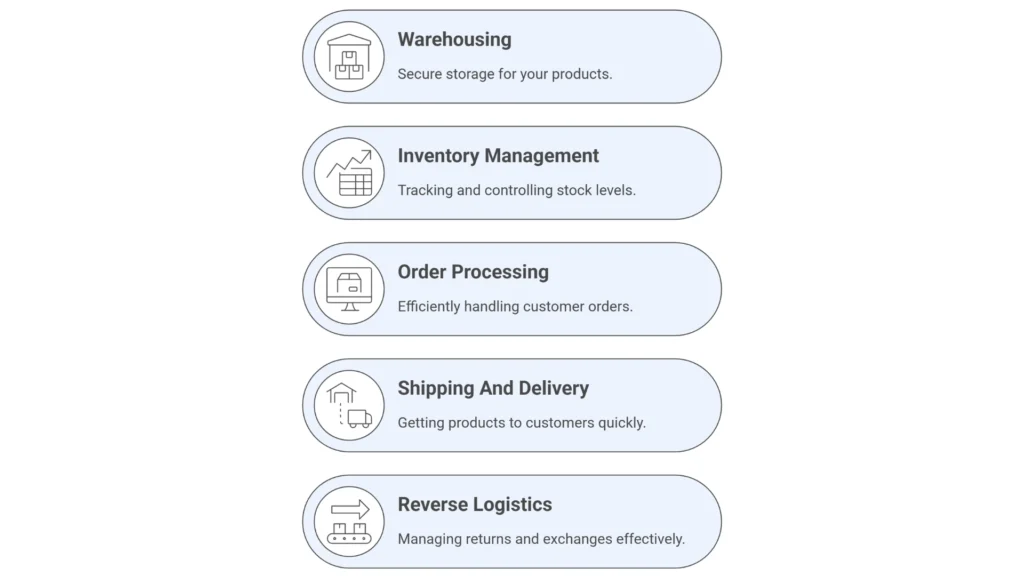
A 3PL fulfillment partner provides numerous services, which are listed below.
1. Warehousing
Ecommerce fulfillment partners provide secure storage facilities to both small and medium-sized enterprises. They have CCTV cameras all around to protect goods from theft. Again, they leverage advanced technologies, such as a warehouse management system and an inventory management system. These advanced software optimize the warehouse facility layout, fulfil orders quickly, and avoid problems of overstocking and out-of-stock issues.
2. Inventory Management
The products of an e-commerce company in India are transported to the fulfillment partner. The staff of the order fulfillment partner carefully inspects the product and then stores it in its designated location. They track them from time to time using advanced software, such as a warehouse management system. The advanced software fulfillment part integrates with the store to update inventory automatically.
3. Order Processing
When a customer orders a product from the marketplace, the order details are sent automatically to the nearby warehouse of the order fulfillment partner. The warehouse staff pick up the ordered products, do a thorough packaging, and hand them to the shipper. The shipper delivers the product to the customer's doorstep.
4. Shipping And Delivery
The fulfillment partner partners with multiple logistics partners and offers same-day or next-day delivery. Some of the fulfillment partners handle both domestic and international shipping.
5. Reverse Logistics
Some customers do not like the ordered product and want to return it. They place the return request on the website or app. The details are sent to the order fulfillment partner automatically. The staff of the fulfillment company pick up the product and bring it back to the warehouse. The staff inspects it thoroughly and determines whether to refurbish, restock, or recycle it.
Why E-commerce Businesses Need A Fulfillment Partner?
An e-commerce business needs a fulfillment partner for the following reasons.
1. Reduces Operational Complexity
Running an e-commerce business requires managing numerous aspects, including inventory and logistics. It becomes quite challenging for small and medium-sized business owners to manage their own operations. Outsourcing inventory management, storage, and logistics to a fulfillment partner reduces the operational complexities of a business.
2. Cost Efficiency
Building a warehouse requires a lot of investment. A business needs to purchase land, build a warehouse, manage staff, and acquire equipment such as a forklift. These all require a significant amount of investment, which is not feasible for small and medium-sized enterprises. A fulfillment partner has a warehouse where a business can store inventory for several months, which reduces the business's costs.
3. Scalability And Flexibility
Product demand usually fluctuates during holidays or particular seasons. Fulfillment partner provides scalable warehouse solutions, i.e., it can accommodate increased demand during holidays or a specific season.
4. Enhances Customer Experience
The fulfillment partner provides same-day or next-day delivery of the product to the customer, thereby enhancing customer satisfaction.
Factors To Consider When Choosing a Fulfillment Partner
Selecting the right fulfillment partner is highly essential for an e-commerce business because it directly affects supply chain efficiency and brand reputation.
The e-commerce business needs to consider several factors when choosing a fulfillment service provider.
1. Technology And Integration Capabilities
The fulfillment partner should leverage advanced technology, such as a warehouse management system and an inventory management system. It should even seamlessly integrate with the e-commerce platforms.
2. Geographical Reach And Warehouse Locations
A fulfillment center service provider should be located close to the target markets. It reduces shipping costs and delivers products to customers faster.
3. Pricing And Service Flexibility
A business can compare pricing models of various fulfillment partners and then select the one that provides excellent services at an affordable warehousing cost. Additionally, there should be no hidden charges when choosing a partner.
4. Experience And Industry Expertise
The fulfillment partner should have experience in the industry of the business. The e-commerce business should thoroughly review and consider testimonials before selecting a provider.
5. Service Level Agreements
The fulfillment partner should provide service level agreements that clearly define delivery timelines, order accuracy, and returns management.
Common Mistakes To Avoid With Fulfillment Partners
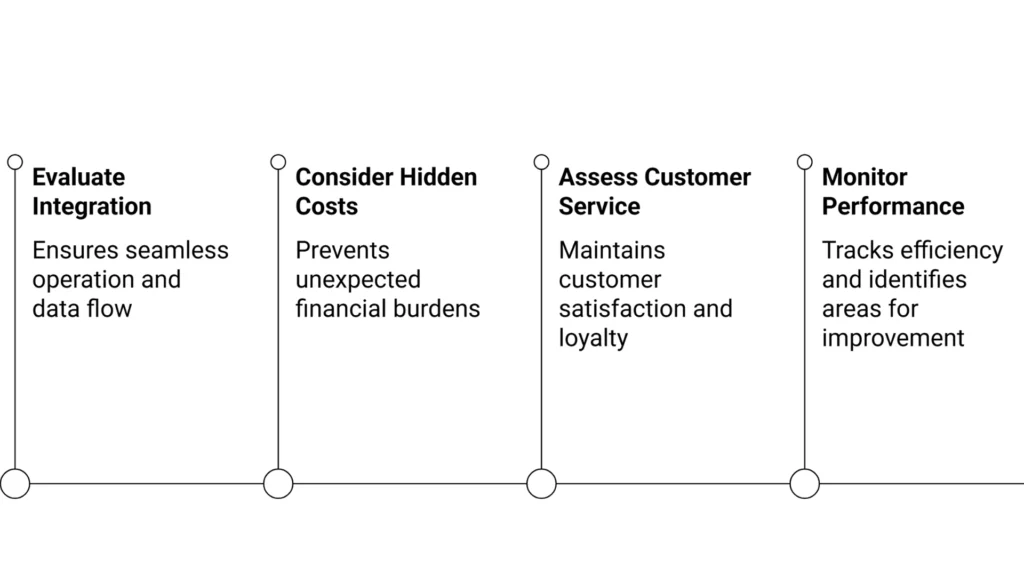
There are a few mistakes that an e-commerce business should avoid while selecting a fulfillment center service.
1. Not Evaluating Integration Capabilities
Many fulfillment partners do not integrate seamlessly with the e-commerce platforms. Many businesses do not give importance to it when choosing, which leads to errors, overstocking, and out-of-stock issues.
2. Ignoring Hidden Costs
Many businesses overlook hidden costs, such as storage and handling fees, when selecting a fulfillment partner. Businesses often end up paying more to the partners and reducing their profit margins.
In short, an ecommerce business needs to review the complete cost structure, including seasonal surcharges and long-term costs.
3. Overlooking Customer Service And Return Handling Processes
Returns are a part of the e-commerce business. However, a fulfillment service provider cannot handle the return process seamlessly, which dissatisfies customers and decreases brand reputation in the market.
4. Not Checking Performance Metrics
Many e-commerce businesses fail to track their fulfillment partners' performance regularly. If the fulfillment company makes a delay in delivering products, then it will result in dissatisfied customers.
Final Words
An e-commerce business cannot manage inventory and storage, particularly when sales grow. A fulfillment partner simplifies the order fulfillment process and delivers products to the customer either on the same day or the next day. They are equipped with advanced technology, which helps avoid problems such as overstocking and out-of-stock issues. This enhances customer satisfaction and improves brand reputation in the market.